Adopt Rolling Forecasts
Static budgets can’t keep pace with how quickly markets and priorities shift. Frequently-updated rolling forecasts give leaders a continuous high-level view of expected performance and allow faster reallocation of resources when assumptions change.
Companies that rely on rolling 12-month forecasts can update their projections more quickly—and with greater accuracy—than those using traditional quarterly methods. In fact, nearly half of rolling forecasts are accurate within 5% of actual earnings, compared to just 35% for companies that forecast four times a year
Implement Driver-Based Planning
Driver-based planning focuses forecasts around the variables that actually move business results—like sales pipeline growth, pricing changes, cash flow or headcount shifts—instead of building line-item budgets. Teams identify their biggest levers, model how changes ripple through the business, then build FP&A processes around those relationships. This speeds up planning and makes forecasts more responsive to operational realities.
Embed Scenario Planning
Waiting for a single forecast to hold true is a risky way to operate. Leading financial analysts model different scenarios—upside, base case, downside—so leaders can understand how sensitive plans are to key assumptions. Good scenario planning is more than just a theoretical exercise; it’s tied to real decisions, like setting hiring targets or adjusting sales strategies based on likely outcomes.
Partner Early and Often With the Business
It’s easier to influence decisions before they’re made than to fix plans afterward. Strategic FP&A professionals get involved early—joining operational reviews, working alongside sales, marketing, HR, and product teams, and embedding financial considerations directly into strategic discussions. True partnership means finance isn't just responding to decisions, but helping shape them alongside internal experts.
Prioritize Insights Over Reports
Effective FP&A teams focus on what business leaders actually need to know. Rather than just reporting what happened, they use analytics to explain why it happened, what it means, and what options leaders have going forward.
For example: Instead of simply noting a revenue shortfall, an FP&A team may identify that most of the gap came from delayed deals in a specific region—and recommend pipeline adjustments or targeted marketing support. Advising in this way turns FP&A into a true decision support function.
Use AI Technology to Automate Low-Value Tasks
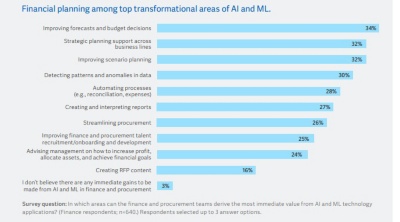
Despite the many finance technology tools now available, 34% of CFOs say they’re still dissatisfied with the number of administrative tasks their teams need to complete. That number drops among AI pioneers, and FP&A capabilities were identified as top transformational areas of AI and ML in the most recent Workday CFO AI Indicator Study.