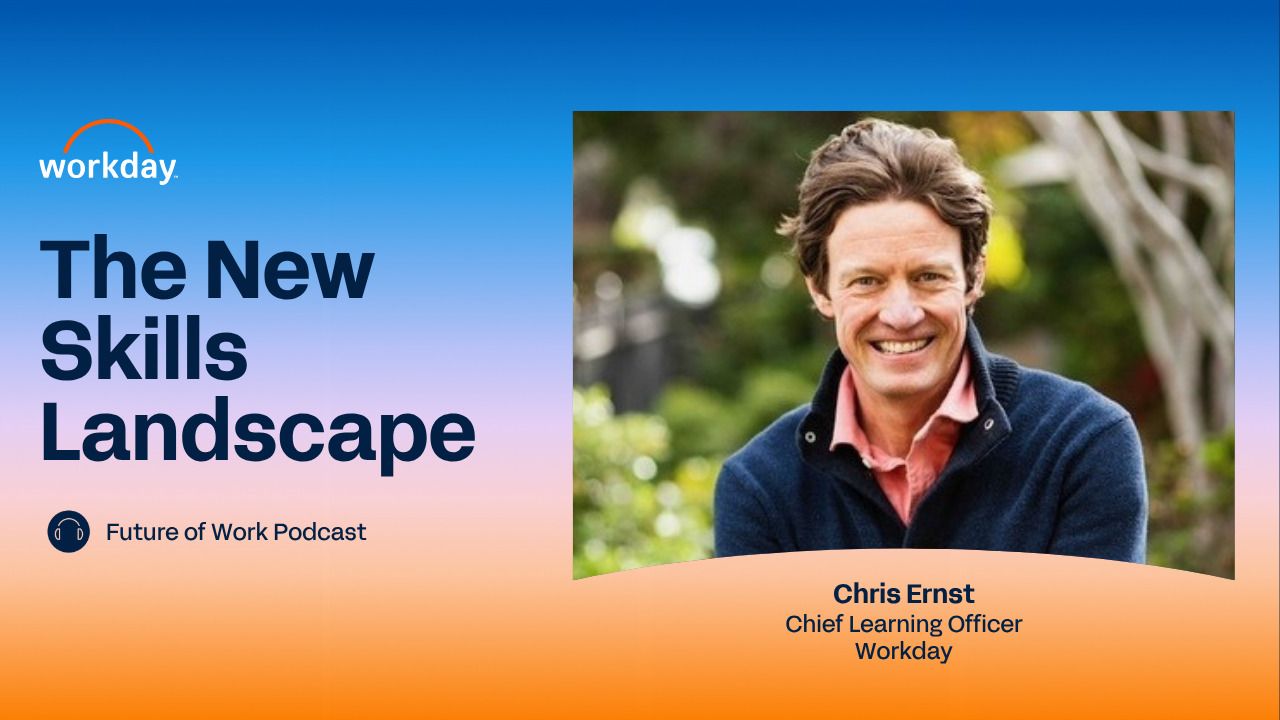
Business expectations are increasing as quickly as AI is advancing. For HR professionals, this momentum presents a compelling justification for investment. The strategic shift toward skills is not just a trend but a ground-level recalibration of how organizations identify, nurture, and deploy talent to achieve business objectives. This is critical for success—especially when considering how quickly business objectives are shifting.
Ernst shed some light on Workday's own internal skills transformation, offering evidence of the tangible benefits organizations can realize:
Faster hiring: By implementing an end-to-end skills-based hiring methodology, Workday saw a 15% reduction in time-to-hire and an 8% increase in acceptance rates for nearly 900 new Workday employees.
- This directly addresses one of HR's most persistent challenges: efficient talent acquisition.
Increased internal mobility: Utilizing Workday Illuminate to match employees to short-term projects (known internally at Workday as “gigs”) resulted in a 42% increase in internal mobility for participating Workday employees.
- This not only helped retain high performing talent but also fosters a dynamic, adaptable workforce that isn’t siloed to their resume.
Decreased L&D costs: An enterprise-wide effort to align learning and development (L&D) investments with critical skills on job profiles led to a remarkable 95% decrease in L&D spend.
- Through more precise targeting, a skills-based approach helped optimize spend and ensure training is actually tied to business needs.
These results are powerful proof-points for any HR leader seeking to build a business case for skills transformation. Demonstrating clear ROI across talent acquisition, internal mobility programs, and talent development efforts helps to create buy-in for a shift in talent strategies that directly impact the bottomline.