Performance Reviews Transformed
For decades, performance reviews have been clouded in a foggy veil of mystery, with employees feeling like they're on the receiving end of a catch-all observation rather than an objective, tailored assessment.
For a number of reasons, like discomfort with confrontation and lack of training on how to deliver constructive criticism, managers often would reserve feedback for a once a year conversation in a formal setting. Not only is this ineffective for the employee, it also puts all of the responsibility and pressure on the manager.
The result was unnecessary anxiety for the manager and their teams, delayed rather than timely feedback, and a missed opportunity for genuine development.
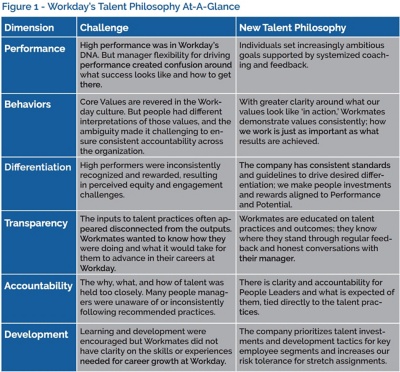
But what happens when the fog is cleared? When we make the criteria explicit, the feedback ongoing throughout the year, and the process a collaborative dialogue rather than a one-way pronouncement? Our employees at Workday shared the following sentiment:
“I see check-ins as an investment in yourself, your relationship with your people leader, and your overall career.”
“Innately, people want to understand how they’re measured, how they’re doing, and what their leader’s perspective of their performance is. This new approach meets those needs.”
“The new cycle of goal setting, check-ins, and calibration has been powerful for driving accountability for both high performers and folks who are trending downward.”
“I feel a difference in the workforce. People will happily come up to you and give you feedback - good or bad - at every level.”
“These conversations for me to step back and think critically about my career. That in itself has been a huge benefit for me.”
As Roxanne Henselman, our VP of Talent Management & Development and a valued member of my team here at Workday, aptly puts it, "Employees crave feedback, they want to know where they stand; being transparent with them about how they’re performing helps build trust and alignment."
This isn't just an anecdotal observation; it's rooted in data. Deloitte reported that 86% of workers and 74% of leaders surveyed report that an increasing focus on trust and transparency in the relationship between workers and the organization is very or critically important.
When individuals understand the "why" behind an evaluation and have consistent, clear insights into their progress or potential areas to improve, they're far more likely to embrace constructive criticism and actively seek ways to develop.