What This Means for Your Workforce
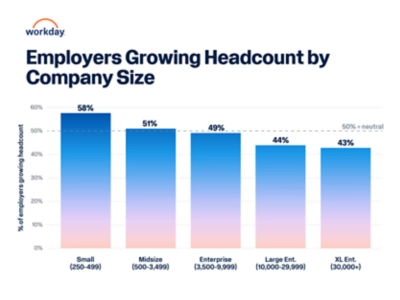
The data tells a layered story overshadowed by labor market headlines. The biggest employers grew the least and accounted for nearly all of the decline, even as smaller companies kept hiring. So the first question for any leader isn't "how is the labor market doing?" It's "how is the labor market doing for a company like mine?"
If you run a large organization, the national recovery is probably not your experience: you're more likely flat or contracting. If you run a smaller or mid-sized company, you're where the growth actually is, hiring with more candidates per opening than you've seen in years. This is a great opportunity to source new talent—the kind that thrives when AI handles the tasks.
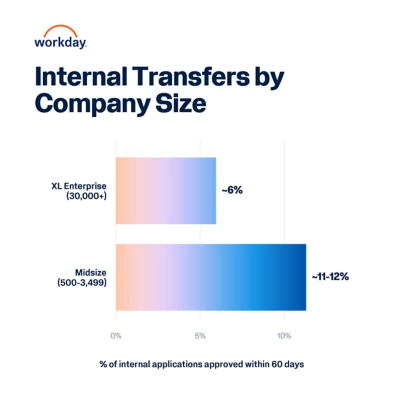
There's a second signal that matters more the larger you are. Hiring has slowed, but so has internal mobility: people are staying, yet moving up and across less than before. At the biggest employers, the odds of landing an internal move are measurably lower.
When external hiring is quiet and people are staying put, internal opportunity is one of levers you can control. But, the data shows this lever has started to rust. Internal mobility fell year over year across the majority of employers, and the decline reaches across every sector and company size.
This is more pronounced within the largest employers, where internal approval rates were lower and continue to fall. This means large employers aren't sitting on an unused internal mobility lever; they're watching the lever corrode. The internal labor market is tightening alongside the external one—so the best retention strategies will treat internal movement as something to actively rebuild, boosting engagement and making career paths visible to build trust and resilience for the AI era.
The takeaway is clear: benchmark against companies your own size and sector, not a national average that describes almost no one. By doing so, you’ll see where you have an opportunity to adapt, not simply watch and wait.
The data in this story stems from Workday’s Global Workforce Report, launching October 1. The report provides a deeper look at the forces reshaping headcount, hiring, retention, and movement inside organizations.