Human Resources
Jabil's Talent Leader Drives Global Brand Success
CHRO Gary Schick transforms global HR strategy through hiring diverse perspectives and skills-based talent.
Julie Colwell
Principal Strategist
Workday
CHRO Gary Schick transforms global HR strategy through hiring diverse perspectives and skills-based talent.
Julie Colwell
Principal Strategist
Workday
In homes, vehicles, and hospitals around the world, Jabil’s work is everywhere, yet most people don’t recognize it. As the “brand behind the brand,” the company manufactures products for more than 400 leading companies worldwide, producing everything from data center equipment to vehicle components to medical devices and consumer electronics.
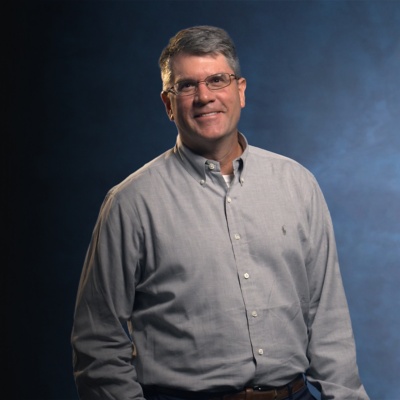
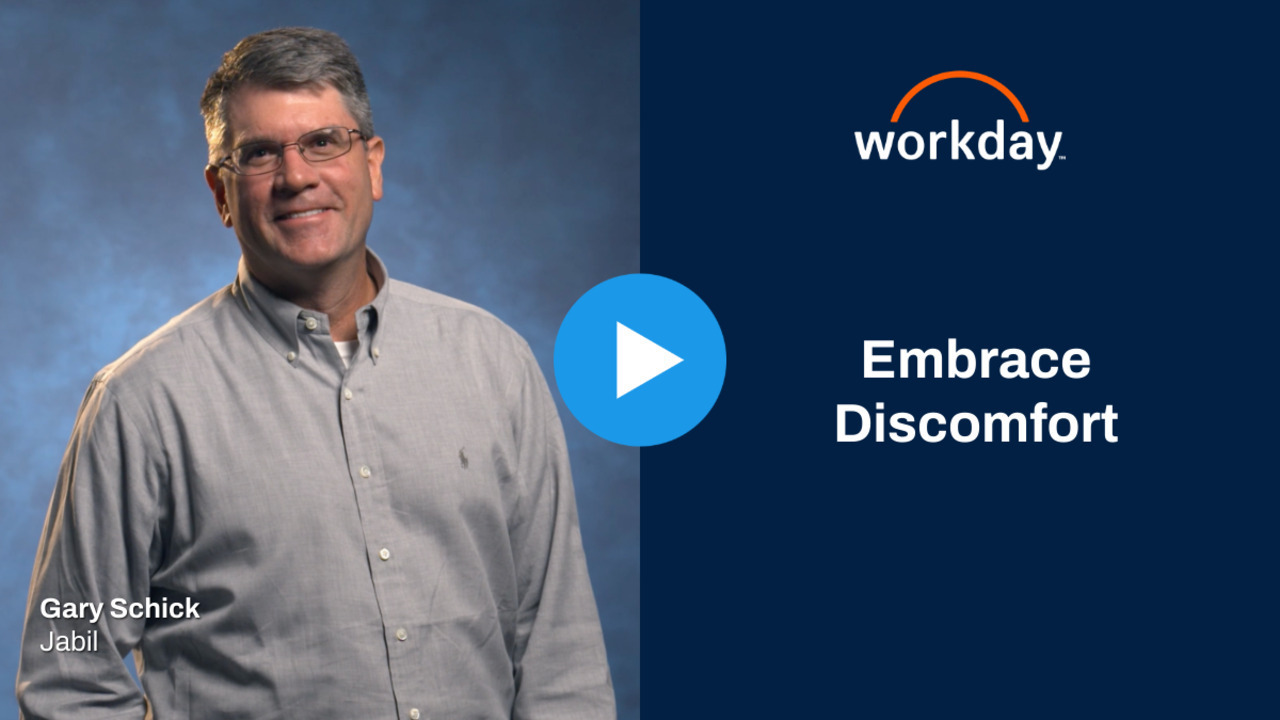
Ensuring the people behind this scale can do their best work is Gary Schick, senior vice president and chief human resources officer (CHRO). He leads a workforce of 140,000 employees across 100 sites in more than 25 countries and is responsible for building a unified culture and people strategy for a truly global population.
For Schick, the CHRO is about enabling operational performance through people. His approach is grounded in the belief that when employees are supported, trained, and heard, the business is stronger.
If everyone who reports to you thinks and acts just like you, you don’t need them. You just need yourself.
Guide
Schick’s leadership style centers on seeking out different viewpoints. Early in his career, a manager told him, “If everyone who reports to you thinks and acts just like you, you don’t need them. You just need yourself.” The guidance stayed with him.
“Listen. Interact with people who are unlike you,” he says. He believes the strongest teams combine smart people with different experiences and ways of thinking. “When you put those together, that’s when your team’s unstoppable.”
At Jabil, where the workforce spans many countries and backgrounds, this mindset is essential. Schick’s own career, which included roles at Alcoa, Honeywell, and Gerdau Long Steel, exposed him to frontline work and the realities of industrial environments. His education, a J.D. from the University of Pittsburgh and a B.A. in Economics from Northwestern, gives him both legal and business perspectives as he navigates global workforce needs.
One of Schick’s most influential career moments occurred long before he joined Jabil. Early in his management journey, he supported a site responsible for maintaining military equipment on ships ready for immediate deployment.
“What made this the most satisfying job I’ve ever had was that many of our employees who worked on that equipment had their sons and daughters fighting in the Gulf War” he recalls.
The experience taught him the real definition of “mission-critical.” The work was about more than getting equipment ready, since often the sons and daughters of the employees relied on that equipment in battle. “When those are the stakes, you think twice about who you hire. And you make sure you train them to do the best job they can,” he says.
At Jabil, Schick is driving a shift from traditional personnel work to strategic partnership. “In the old days, we were order-takers,” he says. “I think it’s the opposite now. We’re part of the discussions that help shape the company.”
We’re evolving to focus on people who have certain skills that can grow or learn into new positions.
Schick is now steering Jabil toward a more skills-based talent strategy. With rapid shifts in technology, automation, and AI, traditional job titles and resumes offer less insight into what a person can do.
“We’re evolving to focus on people who have certain skills that can grow or learn into new positions,” Schick explains. Instead of hiring for static roles, Jabil is looking at a person’s capability, adaptability, and long-term potential.
To support this approach, Jabil is using data to map the skills employees already have and identify those needed for the future. This insight enables targeted training aligned to business priorities. Through in-house development programs as well as partnerships with universities and trade schools, Jabil is upskilling its workforce and positioning itself for the demands of advanced manufacturing.
Schick’s interest in developing talent extends beyond work. He has spent years coaching his son and daughter and their friends in sports. “I love sports and coaching, being around young people and seeing where you can help influence or help them reach a goal,” he says.
He sees parallels between coaching and HR. “Most people don’t come in saying, ‘That’s the job I want to be in for the next 5, 10, 15 years.’ They want to grow. They want to learn. They want to develop.”
This perspective also informs how he manages work-life balance. “I made it very clear that I will not miss my kids growing up,” he says. It’s a reminder that every employee has commitments and aspirations outside of work. Schick believes HR’s role is to support them in both.
Schick acknowledges that the pace of change can feel fast. “We went from my first email about 30 years ago to today, where AI is helping craft those emails,” he reflects.
AI can help all of us work smarter.
Still, he believes adaptability is one of Jabil’s strengths. The company has thrived for 60 years by embracing change and staying focused on its people. Schick views AI not as a threat but as a tool to help employees learn and work more effectively. “If you don’t know, don’t be afraid to ask,” he advises. “AI can help all of us work smarter.”
For Schick, the future of manufacturing will depend on people as much as technology. With a culture centered on listening, coaching, and continuous learning, he is preparing Jabil’s workforce to meet whatever comes next.
Find out how a skills-led approach is delivering smarter manufacturing at Jabil.
Guide

In the past decade HR has undergone a major evoluton from a supportive role to a strategic one. However, as this report finds, HR teams are more conservative on AI than finance and IT. That makes the potential competitive advantage even greater—learn more below.