Must-Have Features in Cloud Accounting Software
While most cloud accounting software systems offer similar core benefits, they’re not all designed the same. Whether they only offer basic features—such as free invoicing, tracking income, and double-entry accounting—or more advanced functionality, choosing the right one for your business means evaluating its specific features and how well they meet your business needs.
From accepting payments to integrated bank account reconciliations, here are some of the key features small business owners should look for when evaluating potential solutions.
Invoicing and Billing Tools
Efficient billing is critical to maintaining healthy cash flow. Cloud accounting platforms execute automated invoice processing to generate invoices when sales are recorded and email them directly to clients. Overdue reminders and recurring billing schedules run without manual input, reducing errors and accelerating collections.
Expense Tracking and Receipt Capture
Accurate expense tracking safeguards profitability. Users can upload or photograph receipts in-app, and OCR technology extracts key details—such as date, vendor, and amount—categorizing expenses automatically and attaching receipts to corresponding ledger entries.
Bank Reconciliation and Transaction Matching
Timely reconciliations help detect discrepancies early. Connected bank and credit accounts feed transactions into the system in real time, where matching algorithms pair imported entries with your general ledger, flagging only exceptions for quick review.
Financial Reporting and Dashboards
Actionable insights drive informed decisions. Pre-built reports—profit and loss, balance sheet, and cash flow—are available on demand, while interactive dashboards allow you to filter and drill into key metrics at a glance.
Third-Party Integrations
Seamless data flow and integration with other business modules ensures accuracy across systems. APIs and native connectors link your small business accounting software with your CRM, e-commerce, payroll, and payment platforms, eliminating manual data entry and maintaining consistency across systems.
Robust Data Security and Compliance
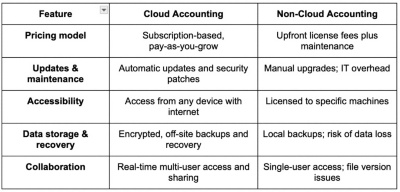
Protecting financial data builds trust. On the cloud, data is encrypted in transit and at rest, with regular automated backups stored in geographically redundant locations. Role-based access controls define user permissions, and comprehensive audit logs track every change for regulatory compliance.