What Agentic AI Means for the Human Workforce
It may seem that agents are poised to replace human employees in many areas but agents (and other AI technologies) actually bring new opportunities for employees to be more strategic, innovative, and impactful.
According to the Workday research, 83% of workers believe that AI can boost their careers by helping them develop new skills in their roles and focus on more meaningful work. These findings reflect a growing shift: AI agents are not just tools of efficiency, but enablers of deeper human contribution.
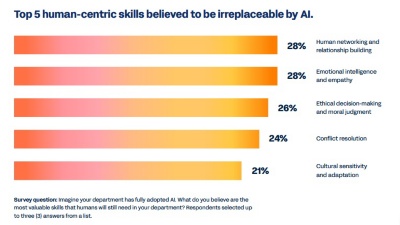
Rather than displace jobs, agentic AI changes the nature of work. Agents take on repeatable, decision-bound tasks that follow clear logic or structured workflows. In doing so, they free up people to focus on work centered on creativity, intuition, innovation, and the ability to adapt amidst change and uncertainty.
This shift raises new requirements for how organizations design work.
Human workers need access to transparent agent behavior, opportunities to intervene, and training to develop new digital fluency. Organizations, in turn, must invest in skills strategies that reflect the changing nature of work, not just the technologies driving it.