The Single Biggest Competitive Advantage for Legal Leaders
AI literacy can be a superpower, but it isn’t gained passively. Here's why hands-on experience with AI tools is now essential for legal leaders.
Tanya Svoboda
Sr. Content Manager
Workday
AI literacy can be a superpower, but it isn’t gained passively. Here's why hands-on experience with AI tools is now essential for legal leaders.
Tanya Svoboda
Sr. Content Manager
Workday
Audio also available on Apple Podcasts and Spotify.
Legal leaders face a choice: advise on AI from the sidelines, or build the hands-on fluency that earns a seat at every strategic table.
As AI reshapes how organizations operate, this choice cuts to the heart of legal leadership today. Will you govern these tools from the outside, or develop the hands-on experience that earns you a seat in every strategic conversation about them?
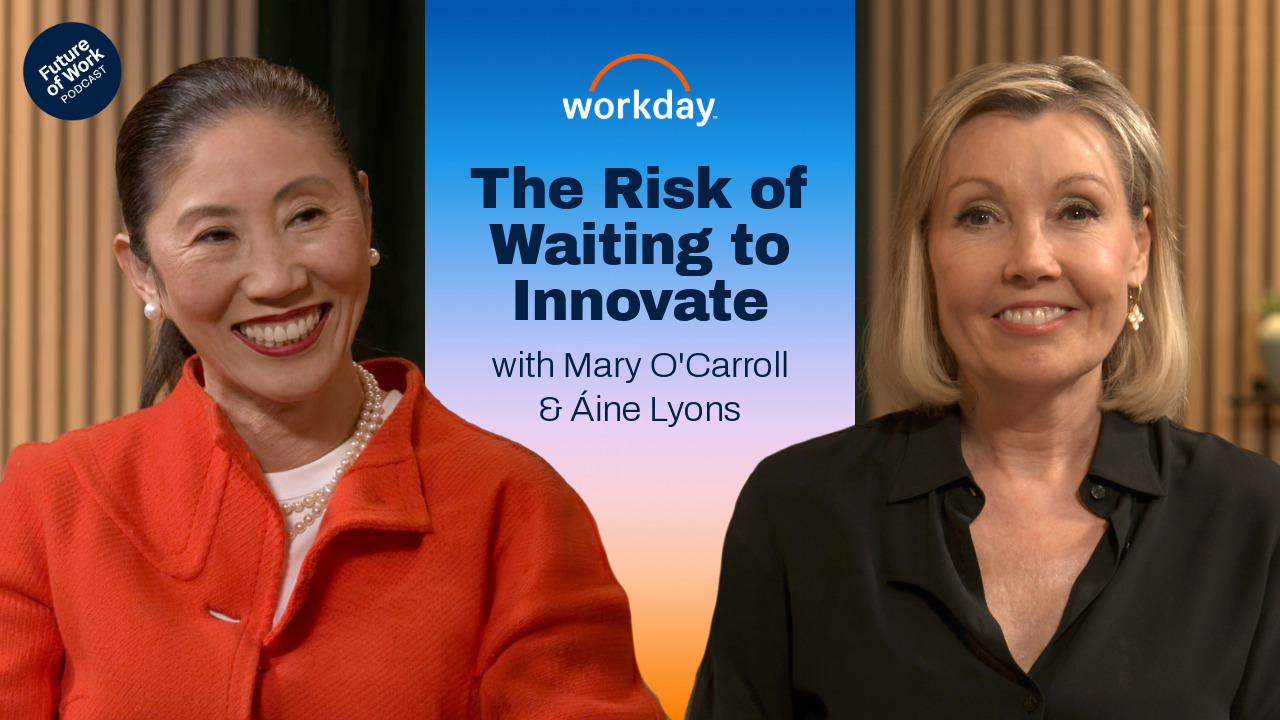
In their recent discussion on Workday's Future of Work podcast, Aine Lyons and Mary O'Carroll, LegalEng CEO and one of the most influential figures in legal operations, made the case for the latter: not as professional development, but as a leadership imperative.
Drawing from their conversation, here's how to build that fluency and why waiting is the riskier choice.
Report
Legal departments have earned their seat at the table by managing risk and saying ‘no’ at the right moments. To build on this profile, it’s time to think bigger. The legal leaders gaining influence today are shifting their scope: from mitigating AI risk to navigating AI opportunity.
Lyons has seen this play out firsthand. Named one of the Financial Times' Top 20 Legal Intrapreneurs of the Past 20 Years, she describes the most impactful legal leaders as those who operate "with a business mindset, but a legal heart," capable of translating legal complexity into strategic direction that moves the organization forward.
The stark reality: a legal team that governs AI purely from the outside—reviewing policies, flagging risks, issuing guidance—will always be one step behind the business. On the flip side, a legal team that has tested these tools, understands their behavior firsthand, and can speak to their real-world limitations earns a very different kind of credibility.
Legal teams are being asked to govern technologies they haven't experienced firsthand. Only 55% of legal professionals are familiar with contract intelligence tools, and just 43% actually use them.
Leaders advising their organizations on AI risk or opportunities without having meaningfully used AI tools face a credibility gap. The guidance may be technically correct, but will lack the texture and authority that comes from direct experience.
Lyons puts it plainly in her conversation with O'Carroll: "How can you advise the business about the risks if you haven't used it yourself?"
"You become a better lawyer, a better legal professional,” Lyons adds, “by knowing how to use it and what the risks are."
Developing AI skills is often framed as a matter of professional development. It is that, but at the leadership level, it’s also about power dynamics within the organization. When legal leaders can speak fluently about AI, understanding the difference between a well-scoped use case and a high-risk one, they become essential voices in every strategic conversation.
It’s the pathway to being trusted more deeply and consulted more broadly.
"Legal uniquely works across the enterprise more than any other department area,” says O’Carroll, who built Google’s legal ops from the ground up. "We work with every team." This makes the legal function a multiplying force—for good or bad.

"How can you advise the business about the risks if you haven't used it yourself?”
Aine Lyons
SVP and Deputy General Counsel, Workday
Building AI fluency can sound like a lot, but the barrier to getting started is lower than many assume. O'Carroll says the hesitation isn't usually objection, but time.
"It's not that people are resistant to the change,” she offers. “It's just when you're in your day job, it's just like a constant influx of work."
Her advice? Don't wait for a structured rollout. Get AI tools into the hands of your team and let them explore. "The creativity really starts to show when people have an opportunity to play with something," she says.
The goal is to shape instincts around pattern recognition: learning where these tools reliably add value, and where they need a closer human eye.
Lyons has operationalized this thinking at Workday, where every one of the company's 20,000 employees carries a goal around AI, and legal team members have completed over 20 hours of training each in areas including prompt engineering.
The return has been tangible: Workday's investment in AI-powered contract intelligence paid for itself 35 times over in three years.
"The creativity really starts to show when people have an opportunity to play with something.”
Mary O'Carroll
Founder & CEO, LegalEng Consulting Group
There is a version of this story where legal leaders hold back: watching, waiting for best practices to solidify, for the market to settle. O'Carroll knows where that path leads.
"If you just keep waiting for everything to settle down and wait for someone else to figure it out... it's going to be too late. The world is just changing too fast."
In fairness, the legal profession has historically rewarded caution. These instincts are hardwired. But caution and passivity are not the same thing. The leaders who will define what legal looks like in five years are building their AI intuition now; not because every experiment will succeed, but because the cumulative experience of trying will grow into something no policy document can replicate.
The legal function is confronting a moment of truth. The tools available today, from contract intelligence platforms to agentic workflows. They represent a legitimate leap in what legal teams can do, and how fast they can do it.
But the technology is only part of the equation. The legal leaders who will shape the profession's future will understand AI well enough to champion it credibly, deploy it responsibly, and translate its value to a skeptical boardroom or a cautious CFO.
That fluency doesn't come from reading about AI. It comes from using it.
Report