7 Workforce Planning Metrics to Measure in 2026
Today’s workforce planning requires the right data insights and metrics to guide smart strategy decisions in real time.
Blaise Radley
Editorial Strategist
Workday
Today’s workforce planning requires the right data insights and metrics to guide smart strategy decisions in real time.
Blaise Radley
Editorial Strategist
Workday
The first half of the 2020s was a challenging time for workforce leaders and employees—but arguably energizing too. The COVID-19 pandemic brought widespread uncertainty and job instability, while simultaneously accelerating remote and hybrid models and sparking a deeper focus on employee well-being.
Now, new dynamics continue to surface, from the rise of AI to a renewed focus on skills. Workforce leaders need a strategic planning approach that helps them stay grounded in what’s happening and adjust in real time. Part of that process is knowing the right metrics to track.
Workday research points to several priorities shaping this next phase of workforce planning:
In this environment, leaders need data-backed visibility into how well workforce plans are holding up in real-world scenarios. These are the seven workforce planning metrics that are the most important for businesses to track:
Guide
Internal mobility allows employees to move to new roles, projects, or career paths within their company. It benefits employees because it gives them the flexibility and opportunity to explore their professional goals, and it also benefits companies by reducing their reliance on external hiring.
By measuring internal fill rate, workforce planning teams can see the percentage of roles being filled internally, evaluate if it aligns with their business goals for internal vs. external hiring, and understand if they're offering enough mobility pathways for their existing employees.
Internal Fill Rate Formula: Internal hires ÷ Total roles filled
Key questions the internal fill rate metric answers:
Why it matters: Internal mobility is one of the strongest indicators of workforce resilience. It also translates directly to a higher-performing workforce overall: Workday research found that internal hires are 82% more likely to be rated “top performers” than external hires.
Internal hires are 82% more likely to be rated “top performers” than external hires.
Time-to-fill (or time-to-hire) measures how long it takes to fill a role when it becomes vacant. For workforce planning purposes, it's an important indicator of hiring process efficiency and can also help identify bigger issues that require a closer look at the overall talent acquisition and recruiting process.
This metric is particularly important for high-level leadership or other priority roles where extended vacancy can negatively impact business. For example: If a regional sales leader role remains open for months longer than planned, revenue forecasts may slip, frontline managers may lack direction, and adjacent teams may slow decisions while waiting for leadership coverage.
Time-to-Fill Formula: Date of offer acceptance - Date of job requisition approval
Key questions the time-to-fill metric answers:
Why it matters: Workforce plans fail when critical roles stay open too long. Knowing average time-to-fill reveals clearly whether hiring speed aligns with operational urgency, and it enables teams to make adjustments to overall processes and approaches to hiring when needed.
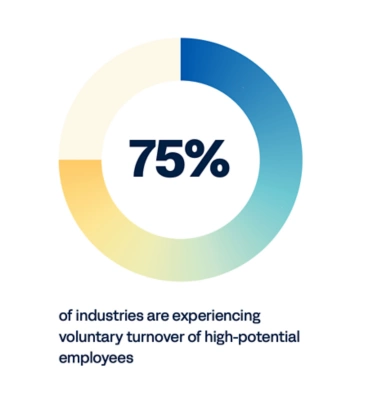
One of the most consistent trends found across the board in the Workday Global Workforce Report was this: Employees—especially high performers—don’t stick around if they don't feel aligned and fulfilled. High-potential voluntary turnover increased in 75% of industries over the past year.
Tracking voluntary attrition is important in order to understand how well employee retention and engagement efforts are working (or not). With a closer look at which kinds of roles are turning over and why, HR can make a more targeted effort to engage with high-risk roles and employees.
Formula: Voluntary exits ÷ Average headcount
Key questions the voluntary attrition rate metric answers:
Why it matters: Even modest increases in voluntary attrition can undermine workforce plans. And because attrition often shows up first in specific roles or teams, it can also signal where engagement or internal mobility efforts are no longer holding. By tracking this metric closely, teams can spot emerging risks early and adjust retention strategies before they have a major impact.
As companies adapt to continually more rapid technology advancements and market shifts, job roles and descriptions are having to become less rigid. Skills now play a bigger role in determining who qualifies for a role and how effective they are once in it.
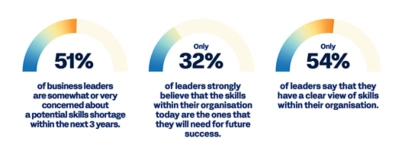
Skills coverage measures how well the skills within an organization match what those roles actually require. The Workday Global State of Skills Report shows that just 32% of leaders believe their current skills will be enough for future success. Over half are worried about an impending skills shortage.
In response, many companies are moving toward skills-based hiring and reskilling to close gaps earlier and more intentionally. For workforce planning teams, skills coverage offers a practical reality check on execution. Roles may be filled on time, but gaps in digital, operational, leadership, or human skills can still slow progress, extend ramp timelines, or trigger unplanned hiring later in the cycle.
Key questions the skills coverage metric answers:
Why it matters: Workforce plans built solely on headcount assumptions are increasingly fragile. As skill demands evolve faster than roles, gaps can emerge even in fully staffed teams. Tracking skills coverage helps organizations move from reactive hiring to proactive planning to stay aligned with the skills required to execute current and future priorities.
Just 32% of business leaders believe their current skills will be enough for future success.
Vacancy rate measures the percentage of roles deemed essential to business execution that are currently unfilled. Concentrating measurement on crucial roles puts attention on the positions where gaps create immediate operational, financial, or strategic risk.
For workforce planning teams, this metric helps separate routine hiring fluctuations from meaningful exposure. Some vacancies are expected and manageable. Persistent vacancies in critical roles, however, often signal deeper issues like misaligned hiring priorities, insufficient internal pipelines, or unrealistic plan assumptions.
Vacancy rate is especially useful when paired with time-to-fill and skills coverage. A critical role may remain open not because of recruiting inefficiency, but because required skills are scarce internally or difficult to attract externally. In those cases, vacancy rate is an early indicator that workforce plans need adjustment.
Formula: Open critical roles ÷ total critical roles
Key questions the vacancy rate metric answers:
Why it matters: Vacancy rate in critical roles sets the boundary for how long a workforce plan is viable. When vacancies persist in roles that anchor delivery, the organization is no longer executing against strategy but operating on temporary workarounds.Tracking this metric helps teams recognize when parts of a plan have effectively expired and need to be revisited.

Workforce costs are often the largest operating expense for organizations—up to 70% of total business costs—which means even small variances can have an outsized impact. Cost drift can emerge for many reasons, including higher-than-expected attrition or increased reliance on contractors.
Workforce cost vs. plan compares actual workforce spending against the assumptions built into the workforce plan. This includes recruitment costs, salary, benefits, bonuses, and other people-related costs tied to staffing decisions. For workforce planning teams, this metric provides essential context for whether their plan holds up financially.
An organization may appear to be executing its workforce plan on paper while quietly exceeding cost assumptions, or conversely, staying under budget because critical roles remain unfilled. Workforce cost vs. plan helps planners understand where financial and staffing realities are starting to diverge.
Formula: Actual workforce cost ÷ planned workforce cost
Key questions the workforce cost vs. plan metric answers:
Why it matters: Workforce cost vs. plan shows whether staffing decisions are still realistic. When costs drift, plans that once made sense can quietly stop being workable. Tracking this metric helps teams see when assumptions need to change, before decisions are forced by budget pressure.
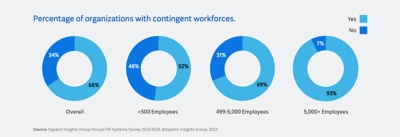
Today, 30-40% of the global labor market already participates in some form of contingent work, and adoption is expected to continue rising. In practice, 66% of organizations—and 93% of large enterprises—already rely on contingent workers, and 85% expect to maintain or increase their use over the next 1-2 years.
These trends make workforce mix an essential structural planning consideration. It measures how total capacity is distributed across full-time employees, part-time workers, and contingent labor. And rather than focusing on headcount alone, this metric highlights how work is being resourced, how employees work together, and whether those choices are intentional or emerging by default.
For workforce planning teams, workforce mix provides valuable insights into flexibility, cost structure, and execution risk. Shifts in mix often happen quietly but materially impact ramp timelines, knowledge continuity, and budget predictability.
Formula: Headcount by worker type ÷ Total workforce
Key questions the workforce mix metric answers:
Why it matters: Understanding workforce mix also clarify tradeoffs. A heavy reliance on contingent labor may support near-term agility, but it can introduce longer-term risks related to engagement, institutional knowledge, or cost volatility. Conversely, an overly rigid mix can limit an organization’s ability to adjust as priorities or demand change.
Together, the right set of workforce planning metrics form a system that delivers clarity.
Workforce management challenges organizations face today are increasingly about agility and alignment. Roles change faster than job descriptions. Skills evolve faster than hiring cycles. Employee expectations shift continuously rather than on an annual plan. In this environment, workforce planning succeeds when leaders have clear visibility and can adjust with intent.
The metrics outlined here are not meant to stand alone. Together, they form a system that helps workforce leaders understand whether their plans are holding up in practice across capacity, capability, timing, cost, and risk. They surface where assumptions are breaking, where pressure is building, and when organizational goals will be impacted.
Most importantly, these metrics move workforce planning out of a retrospective mindset. Alongside other key HR metrics, such as measuring employee engagement and employee satisfaction, they ensure leaders stay grounded in operational realities and adapt with confidence.
Feeling the strain of rapid market changes on your talent strategy? Develop a plan to define goals, evaluate possible vendors, and unlock workforce potential with the right skills technology in this Workday Buyer's Guide.