Global Workforce Management: Best Practices for Success
As companies expand across borders, global workforce management enables them to stay aligned while preserving essential local flexibility.
Sara Braun
Editorial Strategist, HR
Workday
As companies expand across borders, global workforce management enables them to stay aligned while preserving essential local flexibility.
Sara Braun
Editorial Strategist, HR
Workday
By 2030, the number of global digital jobs that can be performed from anywhere will rise 25%, reaching around 92 million. A global workforce—once something nearly exclusive to large corporations—is now possible for any business thanks to the rise of remote and hybrid work models.
Technology has defied borders, making it easier for companies to hire from Tokyo to Toronto. But crossing a map isn't just about time zones—it’s a minefield of regulations and cultural nuances that can seem complicated to even the most seasoned HR vet.
A solid, global workforce management strategy serves as a bridge between local requirements with a cohesive, high-level culture. These five best practices power it at scale.
Report
Global workforce management requires your organization to re-evaluate every aspect of your workforce processes with global talent in mind. It’s critical that you understand local labor laws, cultural differences, and the best way to manage people across time zones—else you risk ostracising international teams and severely limiting your talent pool.
Here are the top 5 best practices for a strong global workforce management strategy:
Data and AI are the powering forces behind global operations—but even the best data and tools break down when they're fragmented. The first step in successfully managing a global workforce is laying the foundation for shared visibility. While it seems intuitive, systems integrations can prove to be a challenge for many organizations.
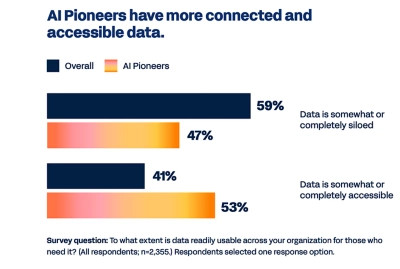
According to the Workday CIO AI Indicator Report, 59% of tech leaders say their data is somewhat or completely siloed, and just 4% say it's fully accessible. Even AI pioneers, classified as organizations that have the highest levels of AI investment and adoption, largely struggle, with 47% reporting siloes and only 7% saying they have full accessibility.
Data and AI are the powering forces behind global operations—but even the best data and tools break down when they're fragmented. The first step in successfully managing a global workforce is laying the foundation for shared visibility. While it seems intuitive, systems integrations can prove to be a challenge for many organizations.
According to the Workday CIO AI Indicator Report, 59% of tech leaders say their data is somewhat or completely siloed, and just 4% say it's fully accessible. Even AI pioneers, classified as organizations that have the highest levels of AI investment and adoption, largely struggle, with 47% reporting siloes and only 7% saying they have full accessibility.
Leaders can start to remedy this by aiming to connect their HR systems with other important tools that inform workforce decisions—payroll, financial management systems, and ERMs, to name a few. A platform tool that unifies these core systems is key to informing workforce decisions with complete context.
Unified records across systems and geographies enables real-time visibility and cross-functional consistency in how data is labeled and measured, driving shared strategic understanding while still allowing for local execution.
Global workforce management presents an opportunity to combine the efficiency of scale with the strength of local insight. Organizations that strike the right balance between global consistency and regional autonomy are better positioned to operate with clarity while still remaining responsive to their local markets, compliance requirements, and workforce expectations.
Leading organizations are intentional about what they standardize globally. Core elements are aligned across regions to create transparency and comparability. This includes:
Data models: Standardized structures for how workforce data is defined, organized, and related across regions
Governance structures: Frameworks that define ownership, accountability, and escalation paths for workforce policies and processes at global and regional levels
Policy intent: A shared understanding of the purpose behind workforce policies, allowing all regions to implement them in ways that meet local requirements (avoiding any legal issues) while staying aligned with global objectives
Reporting definitions: Common definitions for metrics such as headcount, FTE (full-time equivalent), and labor cost that enable accurate comparison, transparency, and enterprise-wide workforce insight.
Within that framework, local flexibility is a strategic advantage, making it crucial to choose a tool built to support enterprises at both global and local levels. Employment contracts, pay practices, benefits, and regulatory requirements naturally vary by country, and effective workforce management tools are designed to accommodate those differences.
By enabling local adaptation within clear global guardrails, organizations support compliance, maintain trust, and operate more effectively across regions.

By 2030, the number of global digital jobs that can be performed from anywhere will rise 25%, reaching around 92 million.
Traditional job-based workforce models were not, in many ways, designed for the realities of global organizations. Titles, role definitions, and career paths often vary by region, and understanding true workforce capacity and capabilities across regions is complex.
Skills-based models offer a more accurate, flexible view of the global workforce. With skills as the main focus, organizations can more easily identify internal talent, support cross-border mobility, and match skills to business needs regardless of location.
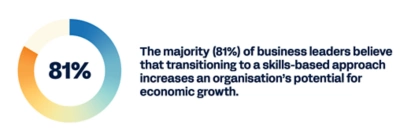
The proof is in the practice: 8 in 10 business leaders today say that transitioning to skills-based workforce strategies increases potential for economic growth.
Skills awareness also powers more proactive responses to change. Organizations can reskill or redeploy talent to address regional shortages, support new business priorities, and create more equitable growth opportunities for international employees.
Global workforce decisions are inseparable from financial outcomes. Hiring plans, location strategies, and workforce mix directly affect labor costs, margins, and long-term growth. Treating workforce planning as a shared responsibility between HR and finance helps align talent investments with business strategy.
Integrated workforce planning connects key measurement metrics like headcount, skills, capacity, and labor costs in a single view. This allows leaders to model different scenarios—such as entering new markets, shifting work across regions, or responding to economic change—and see the financial and workforce implications before decisions are made.
With HR and finance serving as core governance functions across the enterprise, alignment between the two enables stronger leadership and confident planning grounded in current and future resource realities.
HR teams pioneering the use of AI report that it’s enabling their teams to deliver higher strategic value.
As global workforces grow and enterprise systems scale, manual processes become harder to sustain. Managing compliance, reporting, and workforce operations across countries introduces scale and complexity that quickly exceed what spreadsheets and disconnected workflows can support.
Automation helps organizations operate more efficiently while reducing risk and administrative burden. In human resources (HR), this often comes with some concern; 47% of HR leaders reported to Workday that they're worried about the trustworthiness of AI—the highest of any function surveyed. But those that are using AI say it’s enabling their global teams to deliver higher strategic value.
The reality is AI and automation are inevitable in today's business world, and focus is shifting—even in HR—from whether to use AI to how to use it responsibly. Selecting a trustworthy technology provider is an important first step, as is effective training and change management to get teams on board.
Despite the hesitation, there's no doubt about it: using AI and automation to support workforce scale are now best-practice standards.
Managing employees across the world requires leaders to make interconnected decisions—about where work happens, how talent is deployed, and how their resources are allocated—across countries with different rules, expectations, and cost structures.
A strong global workforce management strategy gives leaders the visibility and coordination needed to make those decisions deliberately. With shared data and systems designed to support global oversight and local execution, organizations can scale across regions without losing clarity or control.
When workforce decisions are made with full context across HR, finance, and regional teams, organizations are better equipped to drive growth, manage risk, and operate consistently as their global footprint expands.
Feeling the strain of rapid market changes on your talent strategy? Develop a plan to define goals, evaluate possible vendors, and unlock workforce potential with the right skills technology in this Workday Buyer's Guide.
Report