The CFO’s Guide to Modern Finance Operations
Finance now plays a central role in enterprise strategy and decision-making, and CFOs have to evolve their financial operating models to support it.
Sydney Scott
Editorial Strategist, AI
Workday
Finance now plays a central role in enterprise strategy and decision-making, and CFOs have to evolve their financial operating models to support it.
Sydney Scott
Editorial Strategist, AI
Workday
The modern business world moves at a relentless pace, and leadership expects finance to provide the insights required to keep up. Today, C-suite leaders increasingly view finance teams as strategic partners, relying on their data-driven decision-making to capitalize on new market opportunities in real-time.
The majority (57%) of CFOs say they're among the top leaders influencing strategy across their organization, especially in areas like AI, data analysis, and cloud adoption.
This shift in responsibility is forcing a structural overhaul of traditional finance operations. To maintain operational agility, departments are pivoting away from rigid, cycle-centered processes—like the monthly close or annual budget—in favor of continuous finance models that deliver the live data flow needed to drive long term success.
Report
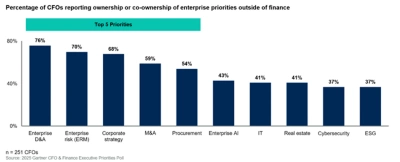
CFOs and their teams now act as a guiding force for the entire business, with responsibilities increasingly expanding beyond the numbers. A recent Gartner survey of 250+ CFOs now have ownership or co-ownership of areas like enterprise data, enterprise risk management (ERM), corporate strategy, enterprise AI, M&A, and more.
Modern finance operations can be defined by these core characteristics:
Connected across the enterprise: Financial data flows across record-to-report, planning, procurement, treasury, and operations, creating a shared source of truth.
Built for continuous decision-making: Forecasting, scenario modeling, dynamic budgeting, and cash flow management operate continuously, not as isolated cycles.
Insight-driven by design: AI-powered tools surface trends, risks, and anomalies in context, enabling finance to guide strategic decisions.
Collaborative and visible: Finance teams, business leaders, and operators work from the same data, improving alignment and accountability.
CFOs now have to rethink how their operating models support that responsibility. Legacy business processes built around static cycles and disconnected systems create friction when finance is expected to guide decisions as they take shape.
Modern finance operations require intentional investment in continuous planning capabilities and teams equipped to engage across the business in real time. Without those changes, expanded ownership creates strain. With them, finance gains the structure needed to operate as a leading strategic resource.
With the shift to modern finance already underway, the challenge for CFOs is now operationalizing it. These steps outline how to lay a foundation for modern finance operations that support financial planning while expanding finance’s role as a strategic leader across the business.
Here are the five steps you need to follow to build a modern finance operation:
The connection between the CFO and CIO underpins some of the most essential parts of the modern financial operation. In particular, the digital transformation that's needed to modernize requires high IT alignment facilitated at the executive level.
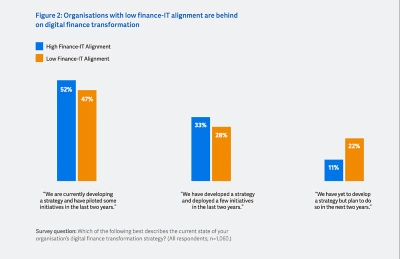
Workday research found that organizations with high finance and IT alignment are definitively ahead on digital finance transformation and are thus better equipped to guide and lead at the level enterprises now expect from their finance function.
To create a durable operating partnership with your CIO, establish a shared ownership model across these core decisions:
Data architecture: Align on how financial and non-financial data is connected and governed across platforms.
Platform strategy: Evaluate systems together so finance requirements around planning and insight are reflected early.
Governance and controls: Agree on access models, approval workflows, and data quality standards that scale with the business.
Reinforce this alignment through regular joint reviews of system changes and roadmap priorities. Over time, a frequent review cadence keeps finance and accounting platforms adaptable while preserving control and confidence in the numbers.
The majority (57%) of CFOs say they’re among the top leaders influencing strategy across their organizations.
CFOs are prioritizing tools that support holistic finance for the future across areas like cloud ERP, financial management systems, and CRM integration.
The key is to build a finance tech stack that serves as a connected foundation for:
A single financial system of record that feeds planning, so forecasts and scenarios reflect current actuals without manual reconciliation
Planning workflows that stay active during execution, allowing assumptions to update as demand, costs, or headcount change
Direct integration with operational and workforce systems, giving finance visibility into the drivers behind performance
When finance systems are built this way, operations teams maintain visibility as conditions shift and can adjust plans without breaking alignment. That allows finance to stay embedded in decisions as they move from strategy into execution.
The business world operates on big data—perhaps finance more than any other function. The ability to translate the meaning behind data insights to key stakeholders is now one of the core responsibilities finance teams hold. In other words, finance helps build data fluency across teams so they can independently use financial insights in their decision-making processes.
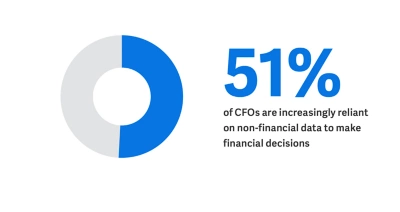
At the same time, non-finance teams become data stewards in their own right, which allows finance to incorporate non-financial data into their processes. Today, more than half (51%) of CFOs rely on non-finance data to make informed decisions, making this shared understanding increasingly critical.
Develop data fluency by focusing on how teams work with information:
Train finance partners to explain what is changing and why, using data to surface drivers instead of reporting outcomes
Standardize definitions and metrics used in planning, so leaders see the same numbers and assumptions across conversations
Make data walkthroughs part of decision discussions, with finance clearly explaining implications before choices are made
Done well, data fluency changes the role finance plays in meetings. Instead of reconciling numbers or answering follow-up questions, finance sets the financial context that shapes which options are considered viable in the first place.
Today 99% of finance and other executive leaders say AI delivers important business benefits.
AI has become the standard for modern finance—99% of finance and executive leaders say it delivers important business benefits. That means simply having AI systems is no longer a differentiator.
From AI agents in finance executing workflows autonomously to AI predictive analytics that make planning more accurate and sophisticated, AI is redefining all aspects of the function. CFOs must be proactive in taking advantage of the competitive gains AI offers.
AI in corporate finance is most effective when it is embedded directly into a platform-based financial management system. With the right platform in place, finance teams can use AI capabilities that are well-governed and designed to work with their existing data and workflows, without needing to build them from scratch or maintain them independently.
As finance becomes a company-wide partner in strategic planning and decision making, leaders must nurture soft skills that make team members good collaborators and communicators.
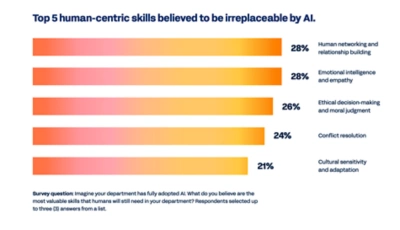
Workday research shows that as modern technologies like AI become more embedded into the work, "soft" human-centered skills are becoming even more important and irreplaceable.
Skills like relationship-building, ethical judgement, conflict resolution, emotional intelligence, and empathy are some of the top areas to focus. Build soft skills development into professional development offerings and recognize employees who show strengths in these areas.
The scope of finance’s role has changed, and finance operating models have to change with it.
As CFOs take ownership across strategy, data, and enterprise technology, finance can no longer rely on operating models built for periodic oversight of the company’s financial health. The scope of the role has changed, and the way finance functions run day-to-day has to change with it.
The organizations that succeed here invest in platforms that keep data aligned across finance and operations. They design planning processes that stay active as conditions change. They develop teams that can explain financial implications in the moments where direction is being set, rather than looking backwards at outdated financial reports.
When operating models match the role finance is being asked to play in today’s business environment, finance truly earns its seat at the center of decision-making—and is positioned to keep it as expectations continue to evolve.
More and more, CFOs are required to be strategic figureheads for their organizations. Learn how the FAME framework can help you achieve your business goals, with case studies from two enterprise-level organizations.

Report