The Rise of the C‑Suite Role AI-First Companies Can’t Ignore
A chief responsible AI officer is becoming a strategic must‑have for the modern enterprise.
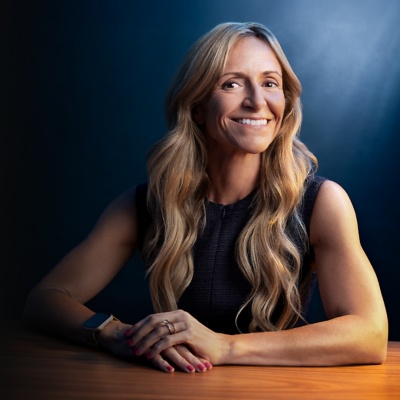
Kelly Trindel
Chief Responsible AI Officer
Workday
A chief responsible AI officer is becoming a strategic must‑have for the modern enterprise.
Kelly Trindel
Chief Responsible AI Officer
Workday
The modern org chart has a new and increasingly essential role: the chief responsible AI officer (CRAIO). The CRAIO changes how companies lead in the AI era by making responsible AI by design a first‑order business decision, not an afterthought. Tasked with building systems that are both high performing and worthy of people’s trust, the CRAIO sits at the intersection of technology, strategy, and human trust.
As software starts to plan and complete work on its own, someone must stay focused on making sure these systems are transparent and stay within clear, well-understood boundaries. Just a few years ago, this job barely existed.
Today, AI is the backbone of how global companies operate, and simply checking a box for compliance is no longer enough. Companies need an executive-level leader who can calibrate what “good enough” looks like for safeguards in practice, bringing business ambition and responsible guardrails into the same conversation, so that the protections we put in place actually make the technology more useful, trustworthy, and effective.
Leaders have realized that if they want to keep the trust of their customers and employees, they need an executive who can turn ethical ideas into measurable business value. To see how this role became a must-have so quickly, we have to look at how AI moved from a back-office tool to an autonomous decision-maker.
The CRAIO changes how companies lead in the AI era by making responsible AI by design a first‑order business decision, not an afterthought.
Report
Not long ago, companies looked at AI through a narrow lens—mostly as a way to patch up a supply chain, optimize a process, or improve an algorithm. Since then, the capabilities have moved incredibly fast.
AI has evolved from a pattern-recognition tool into an assistive system—think of the copilots and AI assistants we use today—that help us code, write, and summarize in real time. They provide us insights that we might not have otherwise realized.
We’re now entering a phase where AI shapes some of our biggest decisions; in addition to helping us organize data, predictive models also suggest the strategic pivots leadership teams rely on.
Most significantly, we’re seeing the dawn of autonomous AI—software that can execute multi-step workflows and even negotiate with other bots with very little human help. Because of this, responsible AI is no longer a niche academic topic, but a core design discipline in a world where we can configure software to act on a company’s behalf.
This shift has raised the stakes for how leaders run companies. We’ve moved from passive tools to active agents, and companies now recognize they need someone at the helm who can shape the future of AI rather than react to it.
Back in 2019 and early 2020, pioneers like Microsoft and Workday began appointing officers to navigate the emerging laws and norms of a technology that is clearly reshaping society. These companies tasked leaders with moving AI out of the research lab and into the highest levels of leadership, with a focus on aligning AI systems with human values in the moments that matter most—product design, go-to-market, and customer commitments.
The urgency only grew with government action, as the EU began developing the AI Act in 2021 and U.S. states proposed legislation in the years that followed. Today, governments are advancing AI regulation, with the finalization of the EU AI Act and new policies maturing worldwide.
At the same time, global standards such as ISO 42001 (a roadmap for managing AI risks) and the NIST AI Risk Management Framework have made the CRAIO an essential part of leadership. The regulatory world is getting more complex by the day, often moving as fast as, if not faster than, the technology itself.

Responsible AI is no longer a niche academic topic, but a core design discipline in a world where we can configure software to act on a company’s behalf.
A CRAIO is a critical defense against data breaches and biased algorithms, but their impact goes far beyond risk management. The ideal CRAIO is a bridge-builder. They can talk shop with data scientists and navigate complex global laws. They also ensure the company’s values are reflected in the AI teams are building and using, in alignment with the company’s business and financial goals.
CRAIOs take big, abstract ethical questions and translate them into practical rules—like requiring a human to double-check a high-stakes decision. They then translate those principles into design choices: how an AI explains its recommendations, how users can contest outcomes, and how feedback from real people improves the system over time.
They aren’t there to be naysayers or to slow things down. They’re part of the team making sure the company grows in a way that’s built to last.
Ultimately, the CRAIO serves as a strategic integrator, someone who understands how technical systems, organizational incentives, and human behavior interact, and can steer AI development accordingly.
The rise of the CRAIO is, at its core, about how a company protects and grows its bottom line. This role is built on the idea that AI systems are sociotechnical—meaning their risks and impact can’t be managed and optimized with code alone. You have to understand technology, human behavior, and company policy all at once.
These leaders drive real economic value in three main ways:
Preventing rework: By building ethical checks into the early stages of a project, the CRAIO saves the company from the massive cost of fixing systems later to meet new rules or repair broken trust.
Boosting profitability: Companies with mature AI programs see an average revenue growth of 18%. When an organization is transparent about how its AI works and the safeguards around it, customers adopt it faster and are more likely to integrate it into their most important workflows.
Protecting market value: Using specialized tools to spot risks early acts as a safety net. This can protect up to 24% of a company’s market value that might otherwise be lost during an AI-related incident.
By steering AI decisions alongside product and business strategy, CRAIOs make sure the company’s technology stays safe, reliable, and grounded in best practices—and that innovation is guided by human-centered outcomes, not just speed to market.
The ideal CRAIO is a bridge-builder. They can talk shop with data scientists, navigate complex global laws, and ensure the company’s values are reflected in the AI teams are building and using.
As AI capabilities expand and regulatory guidance shifts, the job is only getting more complex. We’ve long aimed for a human-in-the-loop model, for example, but that becomes more complicated as AI agents begin to act more independently.
The challenge today is navigating this agentic revolution without losing the human oversight that keeps us grounded. No one wants to fall behind, but experienced leaders also know they can’t just hand over the keys. CRAIOs manage this tension: they design guardrails that allow for high-speed autonomy while ensuring technology amplifies human potential rather than sidelining it.
The next phase will focus on governing agents that can plan and execute tasks independently. To do this, CRAIOs are moving toward adaptive architectures—systems that monitor AI behavior in real time. In high‑stakes domains, that means wrapping probabilistic AI models in a deterministic control and verification layer, so they can act autonomously while remaining fully auditable and under human oversight.
That control layer is powered by capabilities like an Agent System of Record (a digital logbook of everything an AI does) and by ensuring that agents operate with least privilege, meaning they get access only to the specific data they need for the task at hand.
By making sure the level of independence matches the impact of the decision, the CRAIO ensures that accountability is never fully handed off to a machine.
In the end, these leaders make sure that as technology speeds up, the company keeps sight of what matters most: the people who use, are affected by, and rely on its systems. CRAIOs are evolving from managing risk at the margins to shaping how AI shows up at the center of the business, where trust becomes a core driver of the brand.
By making responsible AI by design a first principle—built into how we develop and deploy AI, not bolted on later— we can move past isolated experiments and shadow AI toward a future where innovation is profitable, inclusive, and robust at scale.
Report