Org Models Are Changing and New Roles in AI Are Emerging
Across industries, new roles are emerging that put human-AI collaboration at the center of work.
Michael Brenner
Vice President, Thought Leadership and Customer Advocacy
Workday
Across industries, new roles are emerging that put human-AI collaboration at the center of work.
Michael Brenner
Vice President, Thought Leadership and Customer Advocacy
Workday
From companies as diverse as Walmart, Workday, KPMG and Salesforce, a new generation of job titles is emerging with roles like prompt engineer, adoption strategist, and AI ethicist.
These aren’t science fiction. They’re signals of a major shift underway as organizations rethink how work gets done in the age of AI.
But here’s the real story: organization models are changing because new work is emerging.
Across industries, 82% of organizations say they’re expanding their use of AI agents. Yet our research shows that seven in ten employees see AI’s greatest potential not in automation, but in freeing them to do more human work: collaborating, problem-solving, and creating new value.
This is the human-AI collaboration era. The more we automate, the more human connection we’ll crave. The most valuable new roles are connecting people and machines. They represent a fundamental shift from automation to augmentation, and from control to connection.
Across industries, 82% of organizations say they’re expanding their use of AI agents.
Report
AI isn’t just getting smarter. It’s becoming more agentic. Agency implies that AI can now act on its own to achieve outcomes with a certain degree of autonomy.
But some agents don’t truly act alone. They act alongside humans. Agents can plan, execute, and even improve their own outputs over time. But agents work best when they are guided by human orchestrators.
For organizations, this shift demands new roles and new skills. Roles such as human-AI interaction designer, AI safety engineer, or AI artist are not only popping up on job boards, these roles are becoming the connective tissue between human ingenuity and machine capability. They design the rules of engagement. They make sure AI’s autonomy serves human intention.
The orchestration era is about humans and AI systems collaborating as a single adaptive workforce. This doesn’t make humans obsolete. It makes us superhuman.
In this new model, humans define the mission of setting goals, providing oversight, and ensuring alignment with strategy and values while AI agents handle the scale. They orchestrate processes, data, and workflows that once consumed human bandwidth.
And here’s the bottom line: the companies that get this right won’t just move faster—they’ll work smarter. The real promise of AI lies in how we design it to amplify human strengths. Now, we’re seeing that vision come to life through new roles, new skills, and new organizational models.
If new roles are emerging, it’s because new skills are becoming mission-critical. And the skills that matter most in the age of AI aren’t technical — they’re human.
Across all our research this past year, one pattern is unmistakable: the organizations winning with AI are the ones investing in human capability, not just technical capacity.
Here are the skill clusters rising fastest across industries:
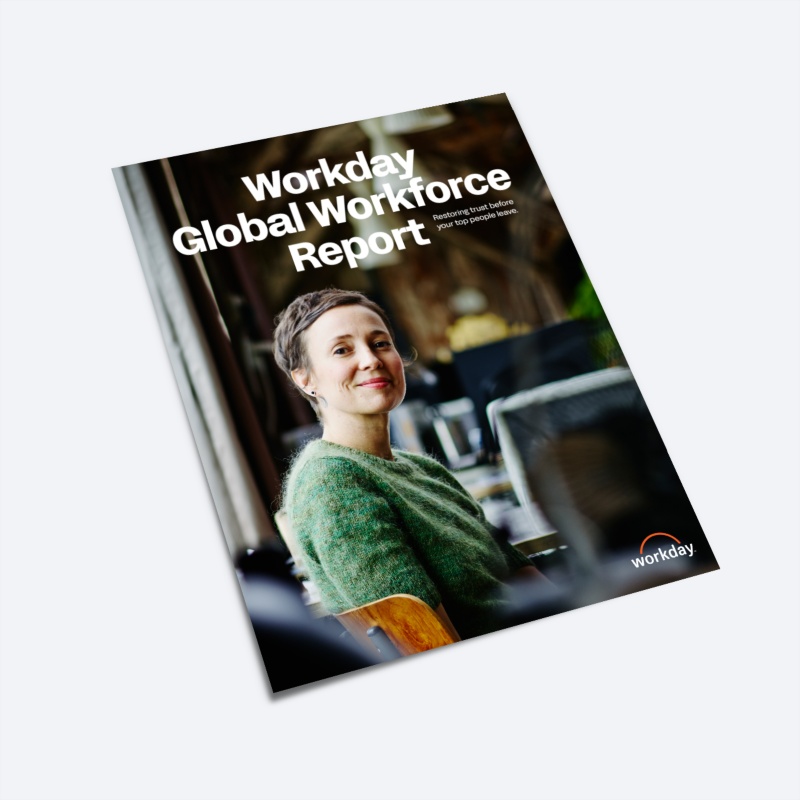
Our Workforce Report showed that many employees feel stuck, promotions are slowing, and mobility is declining. Organizations aren’t structured to help them or prepared to minimize the risk this presents to today’s workforce.
The companies breaking that pattern are doing one thing differently: They are treating skills as dynamic, not static. They invest in skill visibility, learning agility, and internal pathways that evolve as fast as the work does.
I would even argue that resilience may be the single most important skill in the future of work. And our research backs that up.
Across all our studies, creativity shows up as one of the highest-value skills for the next decade.
AI may accelerate ideas, but humans are still the ones who imagine what’s possible.
The winning cultures will be the ones that reward curiosity, encourage risk-taking, and treat experimentation as a muscle, not a moment.
Our Davos research shows employees believe AI’s greatest potential is freeing them to collaborate, solve problems, and create new value.
This is the shift from task work to team work. The future belongs to teams who know how to work better with each other.
But it’s also about humans who are maximizing the potential of co-creating with AI.
As AI becomes more autonomous, leaders need to become more accountable. AI can recommend. But humans decide.
So we need leaders who are skilled in risk assessment, candor, transparent decision-making, and the ability to demonstrate and communicate ethical reasoning.
No algorithm can build trust. No agent can coach someone through conflict. No model can reinforce culture.
As AI scales, the uniquely human parts of leadership such as empathy, clarity, purpose, and connection become the true differentiators. These aren’t “soft skills.” They’re the operating system of the new workforce.
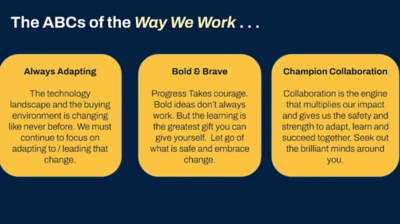
That’s why I created this guide for my own team for how they should think about the way we work:
My goal is to provide clarity on the skills that define not just how well we performed, but also how well we are developing the type of team we need to be going forward.
The real promise of AI lies in how we design it to amplify human strengths.
AI is fundamentally redesigning how work gets done, yet it’s the choices leaders make that will give that work meaning.
The future will be shaped by leaders who are deliberate in architecting new ways of working—systems that effectively leverage AI's benefits while simultaneously investing in their people.
These leaders must focus on equipping employees with the skills necessary to become successful collaborators with AI, making intentional decisions about the organization they want to create and the products they build.
Leaders in the future of work are not just helping companies adopt AI. They’re helping them reimagine how people, teams, and technology come together to drive growth. Because the ultimate goal isn’t to automate every task. It’s to design work that works for people.
The organizations that thrive in the years ahead won’t be the ones with the most AI. They’ll be the ones who thoughtfully redesigned AI with humans in mind, AI built on trust, collaboration, and connection.
Report