Everyone Can Be a Builder
Gartner projects that by 2028, agentic AI will be built into one-third of enterprise software, quietly handling up to 15% of everyday decisions behind the scenes. Momentum is building, and it’s not hard to see why: AI agents offer a true human-centric vision for the technology, where talent is augmented and capabilities are broadened.
Simply put, agentic AI is about removing friction so people can do their best work. Agents take on repetitive, tedious, and analytical tasks with minimal handholding. They free up energy for creativity and connection.
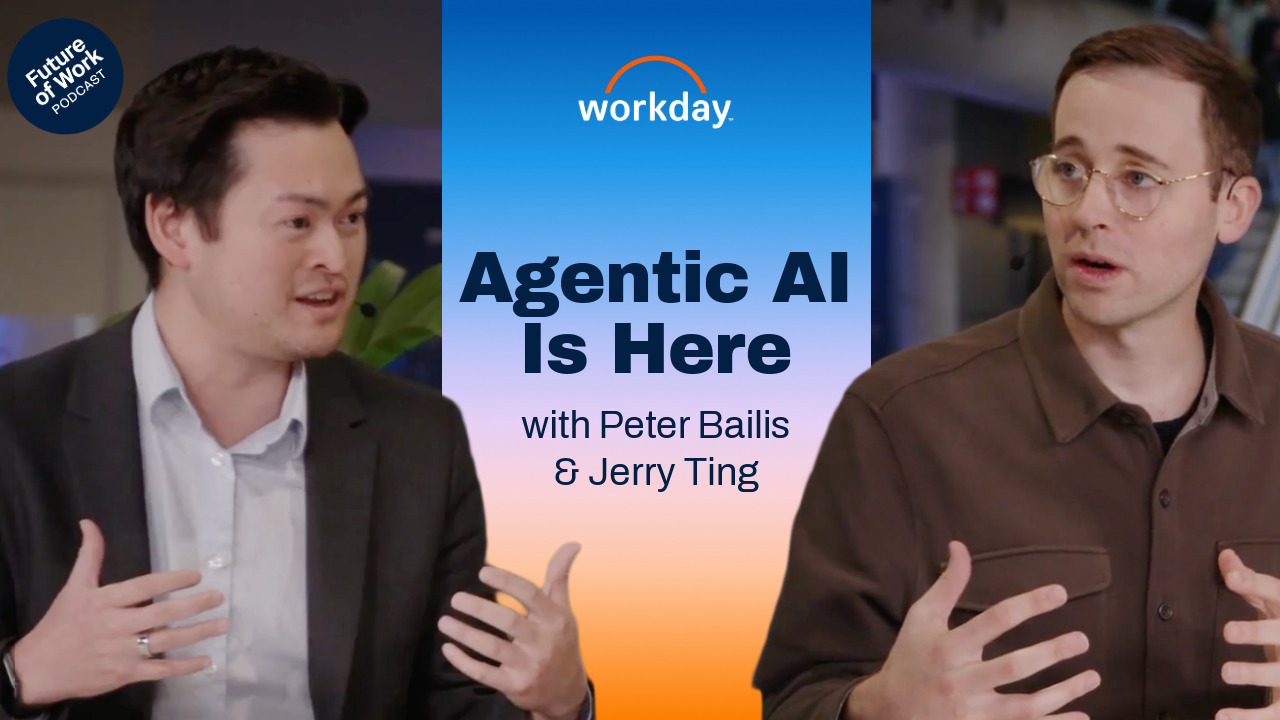
This “human plus AI” model, as Bailis puts it, shows up most clearly in the employee experience. Instead of navigating complex systems or escalating questions through layers of administration, workers can interact directly with AI agents that understand business context and respond in the flow of work.
The best part? This level of innovation is no longer reserved for technical specialists, says Ting. He encourages those who haven't yet experimented with the technology: “I think for folks who have not played with AI yet, it's time to get started…with Workday's strategy today about opening up our ecosystem and allowing both developers and knowledge workers to build on Workday, anyone can get involved.”
To ground the benefits of agentic AI in a practical, everyday scenario, he shares an example from his own life: building an agent to help automate meal planning at home. As Ting illustrates, this isn’t only about enterprise-scale change. “It really impacts the very fundamental of, what do I do as a person? How do I use AI to make my life better?” he says.
That democratization of building is powerful. It brings innovation closer to real human needs and accelerates learning across organizations, because the people closest to the work can now help shape how it’s done.