Sustainability-Driven Spend Optimization
Sustainability is no longer just a corporate responsibility—it's becoming an operational priority. Modern BSM tools are increasingly incorporating environmental, social, and governance (ESG) metrics to help businesses track their environmental impact and make more sustainable choices.
By leveraging AI-driven analytics, companies can identify eco-friendly suppliers, optimize resource consumption, and ensure compliance with evolving regulations. This not only aligns spend management with corporate social responsibility goals, but also addresses the growing demand for sustainable business practices from consumers and stakeholders alike.
As sustainability continues to influence business strategies, spend management solutions will play a crucial role in integrating ethical practices into financial operations.
Human-AI Collaboration for Financial Strategy
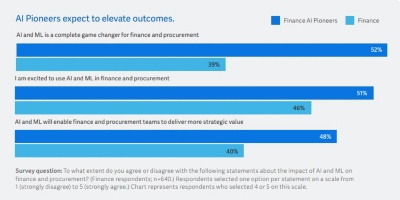
AI is not about replacing finance professionals—it’s about elevating existing human skills and strategic capabilities. As AI takes over repetitive, data-heavy tasks, finance teams are freed up to focus on higher-level decision-making and analysis.This shift fosters a collaborative approach where humans and AI can work together to develop and execute financial strategies.
In practical terms, this might look like AI handling transaction monitoring and fraud detection while finance leaders interpret the insights and build strategic initiatives. As companies increasingly recognize the value of this partnership, expect to see more intentional integration of human expertise with AI-driven insights. This collaborative model will redefine financial leadership, blending analytical precision with human judgment.
Looking to the Future
The future of business spend management requires a fundamental rethinking about how companies approach financial strategy. As AI and automation continue to advance, they’re not just making processes faster or more accurate—they’re transforming how businesses make decisions, manage resources, and maintain long-term financial health.
BSM, in turn, is evolving from a back-office function to a strategic enabler—one that empowers businesses to be proactive rather than reactive. Companies that invest in modern BSM solutions are positioning themselves to adapt to changing economies and make data-backed decisions that align with their long-term vision.
The shift requires more than technology and an eye on your bottom line. It demands a mindset of continuous improvement, a willingness to embrace innovation, and a commitment to integrating new approaches thoughtfully and strategically.