How to Calculate Cash Burn Rate
Calculating cash burn follows a sequence of steps that each builds on the last. By working through the process methodically—from selecting a time period to translating cash burn into runway—finance teams can move from a single data point to a more complete view of liquidity and spending pressure.
Here are the seven steps to ensure you calculate burn rate correctly:
1. Identify the time period
2. Calculate gross cash burn
3. Calculate net cash burn
4. Translate cash burn into cash runway
5. Account for fixed vs. variable cash burn
6. Forecast cash burn over time
7. Watch for common pitfalls
Step 1: Identify the Time Period
Cash burn is usually calculated on a monthly basis because it aligns with budgeting, forecasting, and performance review cycles. Using a consistent time period makes it easier to track trends and spot changes early. Quarterly views can be useful for higher-level planning, but monthly revenue and outgoing tracking offers more actionable insight.
Step 2: Calculate Gross Cash Burn
Gross cash burn measures total cash spent during the period, without accounting for any cash inflows.
Formula: Gross Cash Burn = Total Cash Expenses During the Period
This includes cash expenses like payroll, rent, technology costs, and any other operating expenses. Non-cash items like depreciation and amortization should be excluded.
Example: During the month, an organization spends $850,000 on payroll, rent, software, and other operating costs. Its gross cash burn for the month is the same: $850,000.
Step 3: Calculate Net Cash Burn
Net cash burn accounts for both cash outflows and cash inflows, showing how the company’s cash position is actually changing.
Formula: Net Cash Burn = Cash Outflows – Cash Inflows
Cash inflows include things like customer payments, financing proceeds, or other sources of cash received. Net burn rate provides a clearer picture of liquidity and near-term sustainability.
Example: In the same month, the company collects $500,000 in cash from customers. Net cash burn is $350,000 ($850,000 in outflows minus their $500,000 in inflows).
Step 4: Translate Cash Burn Into Cash Runway
Cash runway extends net cash burn by estimating how long current cash reserves will last if spending continues at the same pace.
Formula: Cash Runway = Available Cash ÷ Net Monthly Cash Burn
Runway helps finance teams assess urgency and make more informed decisions about hiring, investment timing, and cost controls.
Example: If the company has $4.2 million in available cash and a net monthly cash burn of $350,000, its cash runway is approximately 12 months.
Step 5: Account for Fixed vs. Variable Cash Burn
Fixed cash burn includes recurring and relatively stable costs like salaries, leases, and long-term contracts. Variable cash burn includes discretionary or usage-based expenses like marketing spend or cloud services. Understanding both matters because variable burn can often be adjusted more quickly when conditions change.
Example: If most of the company’s $850,000 in monthly spending is fixed, reducing burn will require structural changes. If a large portion is variable, the company may have more near-term flexibility.
Step 6: Forecast Cash Burn Over Time
Calculating cash burn is only the starting point. Forecasting helps finance teams understand how burn may change as assumptions shift. Common approaches include:
- Trend-based forecasting using historical spend
- Driver-based forecasting tied to headcount or revenue growth
- Scenario modeling to compare base, upside, and downside cases
Example: If the company plans to increase hiring or marketing spend, projected cash burn and runway can be recalculated to reflect those changes before decisions are finalized.
Step 7: Watch for Common Pitfalls
Even with a clear formula, cash burn can be misinterpreted if common issues aren’t accounted for. Finance teams often run into problems when:
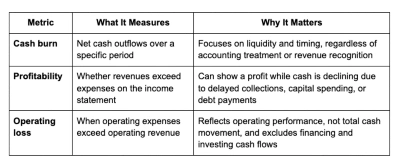
- Cash burn is treated as interchangeable with profitability. A profitable income statement doesn’t guarantee positive cash flow if collections lag or upfront investments are significant.
- Timing differences are overlooked. The gap between when expenses are paid and when revenue is collected can materially distort month-to-month burn.
- One-time or irregular expenses aren’t adjusted for. Large, non-recurring costs can inflate burn temporarily and obscure underlying spending patterns.
- Assumptions go unchanged as conditions shift. Hiring plans, growth targets, or market conditions can change quickly, but burn calculations aren’t always updated to reflect them.
Example: If customer payments slip from the end of one month into the beginning of the next, net cash burn for that month may appear higher than normal. Without context, that spike could prompt unnecessary concern, even though the underlying business performance hasn’t changed.