3 Takeaways For Your Workforce Planning
For leaders looking at their own workforce plans for the quarter ahead, there are three concrete implications of Workday’s latest research:
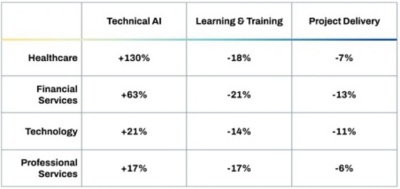
1. Balance your technical vs. functional portfolio. If your hiring for technical AI skills is up double digits and your hiring for everyday AI skills, coordination, and training is flat or declining, you may have an ROI concentration problem hiding in your talent plan. The technical experts you hire will produce more AI capabilities, but you may not be staffed to convert those capabilities into business value. Remember, the data shows employees who consistently generate net gains from AI are twice as likely to receive substantial skills training as those who struggle.
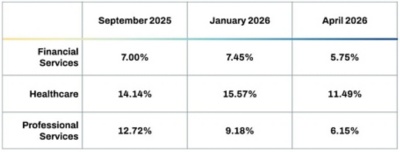
2. Audit your fiscal-cycle behavior. If hiring for AI literacy spikes with a budget refresh and quietly disappears each quarter thereafter, that's a warning sign, not a plan. Workday's research shows organizations still allocate the largest share of AI-driven cost savings to technology (39%) over workforce development (30%)—and while 66% of leaders call skills training a top priority, only 37% of those experiencing rework actually receive more of it. Sustained investment produces sustained capability.
3. Stop treating coordination like overhead. Hiring fewer people to conduct training and manage project delivery may seem like "efficiency,” but they're better understood as reductions in the organization's ability to absorb its own AI investment. Be cautious about removing the connective tissue that routes AI output into the business. Some of that trade-off may be quietly cutting the capacity AI deployment depends on.
About this analysis: These findings are part of Workday's ongoing workforce trends research, building on the Workday Global Workforce Report's work on AI and the workforce. They reflect early, directional signals from job listings across four industries, and will continue to evolve as the research expands.