HR Analytics: Real-World Use Cases and Examples
With an advanced HR analytics strategy, business leaders are achieving stronger outcomes in workforce planning, talent retention, and more.
Sara Braun
Editorial Strategist, HR
Workday
With an advanced HR analytics strategy, business leaders are achieving stronger outcomes in workforce planning, talent retention, and more.
Sara Braun
Editorial Strategist, HR
Workday
Today, every company has access to vast amounts of data. The key differentiator—including in HR—is how well you manage and apply it. For many, this shift has sparked a high-stakes debate: Will machines eventually take the "human" out of human resources, or can data actually sharpen our judgment?
The pioneers who have already taken the leap with predictive HR analytics are already seeing how that story unfolds—one where recruiting, workforce planning, and skills management aren't just faster, but better. Thanks to data-driven workforce insights, HR teams finally get the breathing room to focus on what they do best: human-centered engagement and high-value strategy.
These real-world HR analytics examples prove that a smart data strategy isn't about becoming more robotic. It's about transforming HR from an administrative backbone into a strategic engine that powers a better employee experience and stronger performance management across the board.
Will machines eventually take the "human" out of human resources, or can data actually sharpen our judgment?
Report
HR analytics is the use of workforce-related data to guide business strategy. By analyzing and interpreting employee-related data, HR teams are able to make stronger strategic decisions. Typical goals involve improving HR processes, covering everything from hiring, to onboarding, and employee retention.
In order to make the transition to more data-driven decisions, most organizations follow what is known as the HR analytics maturity model. The four stages involved are:
1. Descriptive (Reporting): The foundation of standard reporting. This provides the essential “what” of the past and present, covering HR metrics like headcount and turnover rates.
2. Diagnostic (Insight): This stage uncovers the “why” behind the trends. By looking at data across different departments or geographies, leaders can identify the drivers behind specific organizational patterns.
3. Predictive (Forecasting): A turning point toward strategy. Using historical patterns, HR can forecast future trends, predicting upcoming talent needs or spotting areas for growth before they become urgent.
4. Prescriptive (Optimization): The most advanced stage. Prescriptive analytics use modeling to suggest specific interventions, helping HR leaders test how different strategies might optimize the workforce for future business outcomes.
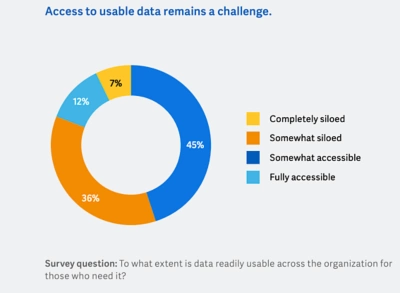
In order to apply HR analytics successfully, data integration across the organization is key. For most companies, this is a challenge: Today nearly half of business leaders say their data is still somewhat or completely siloed. Only 12% say their data is fully accessible. To make fully-informed decisions, HR needs to be connected to what’s happening in all areas of the business.

The best way to understand the full impact of workforce analytics is to consider how teams are using it in the real world. These four real-world HR analytics examples show how teams can apply the wide range of applications for HR data:
1. Talent acquisition efficiency and impact
2. Employee retention tracking
3. Skills development and internal mobility
4. Workforce planning
Talent acquisition and recruitment are core contributors to the organizational growth engine. HR analytics help monitor how well those efforts are working. When recruitment is both efficient and aligned with company strategy, it’s better poised to make an impact. Important metrics to prioritize:
Example: Diagnosing a Hiring Slowdown
A fast-scaling SaaS company might notice their time-to-fill for customer success roles is rising over time. With a closer look at stage-to-stage conversions, they see the slowdown is happening after the first interview, where more candidates than expected are being ruled out.
With these insights, the team can tighten the role profile and work with recruiters to align on criteria for advancing candidates. Without an analytics-driven view into their hiring pipeline, leaders would have been left guessing (or spending a much longer time searching) about the root of the issue vs. fixing it quickly.
High retention hinges on a strong employee experience and robust engagement. While experience quality is more nuanced than a dataset can indicate, HR analytics still tell a story about how companies perform in this area. Key indicators include:
Example: Spotting an Attrition Hotspot
A manufacturer may see steady overall attrition, but find that regrettable attrition is rising on a single shift at one plant. When HR breaks down the data by team and job family, a pattern emerges showing that most exits are happening on teams under the same few supervisors.
By focusing on a smaller set of signals to gain more context, the HR department can take targeted action to remediate the problem. In this case, broader scope data initiates action to zoom into more specific datasets and insights, ultimately leading to action that’s immediately impactful for affected teams.
High retention hinges on a strong employee experience and robust engagement.
With skills-based hiring and reskilling both core parts of the talent agenda for HR professionals today, it’s essential to have a clear view of current and needed skills within the organization. HR analytics can help in the following ways:
Example: Aligning Learning Programs to High-Demand Roles
A financial services firm may see high participation in their new data analytics training program, but no corresponding increase in internal mobility into analytics-focused roles. By comparing skills inventory data with post-learning outcomes, HR identifies that while employees are completing courses, they’re not gaining the applied skills needed for open roles.
By applying these findings, HR teams can refine the curriculum to include more hands-on project work and create clearer pathways for employees to transition into those positions.
Strategic workforce planning is key to making sure the organization can meet demand while staying responsibly aligned with budget and goals. Done well, it connects business plans to talent supply so leaders can see what’s coming next, how long it will take to staff for it, and actions they can take now to prepare. HR analytics can help teams analyze:
Example: Preparing for a Product Launch
A software company that plans to launch a new product line in six months might predict a 30% increase in support volume in the first two quarters after release. HR and operations teams can work together to forecast expected demand increases by tier and channel and make an action plan to prepare for it, like leveraging contingent labor or accelerating onboarding programs.
HR analytics is most valuable when it's used as a true decision tool, not a reporting exercise.
HR analytics is most valuable when it's used as a true decision tool, not a reporting exercise. The maturity model shows the progression: Move from describing what happened, to explaining why, to anticipating what’s next—and, eventually, to testing which actions will make the biggest difference.
The use cases above are diverse, but they all follow the same logic. Connect high-signal data points across the employee lifecycle, then tie them to outcomes important to business success. At that point, the work shifts from measurement to momentum.
Use what you learn to make one better decision, capture the outcome, and repeat. That’s how HR analytics earns trust and scales impact across the organization.
The right workforce management solution can reduce turnover by 45% and save an average of $650,000 over 5 years. Download this Workday Buyer's Guide to identify the optimal system for your business today.
Report