Forecasting has become a clear marker of business leadership and discipline. Teams that treat it as a central practice on par with areas like budgeting and enterprise risk management are better positioned to navigate uncertainty and capitalize on new opportunities as they emerge. When forecasting is executed well, it sharpens decision-making and builds credibility with key stakeholders.
Korn Ferry research shows the payoff is real: Companies with rigorous, tech-enabled forecasting workflows achieve 21% higher quota attainment, 18% higher win rates, and 25% lower customer churn than their peers.
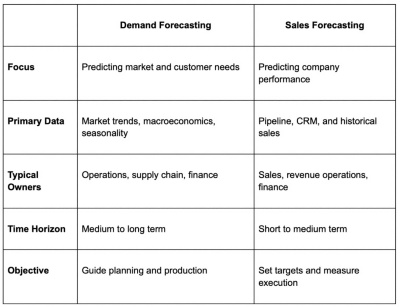
Yet for many organizations, forecasting remains inconsistent and often confusing. Boundaries between sales and demand forecasts blur, and the insights lose their impact. Too often, each forecast is built in isolation, leaving departments without the clarity they need and leaders without a connected view to guide strategy.
Recognizing the distinct role each type of forecasting method plays—and using the right tools to bring them together—is critical to unlocking their full strategic value.