
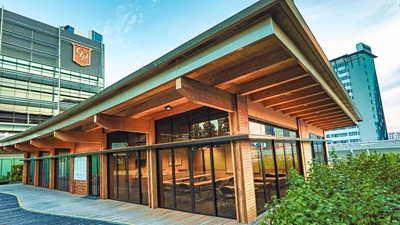
Headquartered in Singapore, City Developments Limited (CDL) operates real estate development, investment properties, hospitality, and facilities management businesses across 167 locations in 28 countries and regions. That reach brings together corporate functions, asset management, operational teams, hospitality employees, and project-based workforces.
The challenge was not simply scale. CDL needed consistent governance, reliable workforce data, and stronger insight while retaining flexibility for different business units.
Over time, CDL had accumulated a mix of systems and processes. Fragmented data and varying workflows made reporting and administration more complex. Management visibility was limited, HR data was difficult to connect with broader enterprise systems, and compliance and governance required increasing effort.
Workday's ability to evolve alongside our changing business requirements was one of the most important considerations, and its ability to consolidate workflows and improve data consistency across the organization was an important factor in our evaluation.
Chief Technology Officer, City Developments Limited
Modernizing for what comes next.
CDL selected Workday HCM to establish a more standardized digital backbone for people operations. Its evaluation considered functional fit, integration capability, security, user experience, data governance, reporting, and the platform’s long-term sustainability. CDL also wanted to improve data consistency and consolidate workflows while retaining flexibility for the needs of different business units.

Turning cleaner data into greater confidence.
The impact is clearest in CDL’s workforce information. Instead of working across fragmented sources, teams now have a more unified model that supports reporting, analytics, employee data management, and approvals.
“One of the more meaningful outcomes of moving to Workday has been improved visibility and consistency of workforce data across the organization,” says Ivan Ng, chief technology officer at CDL. “Workday's unified data model has helped reduce manual reconciliation work, improved our confidence in reporting and analytics, and strengthened governance around employee data management and approvals.”
Managers also have easier access to workforce information and clearer visibility into organizational structures. From a technology perspective, greater standardization and integration have reduced some of the overhead associated with maintaining multiple disconnected systems.
The change extends to employees’ day-to-day experience. Digital access makes it easier for people to retrieve information and complete tasks wherever they are, although CDL continues to support adoption through training, engagement, and ongoing improvements based on business feedback.
One common piece of feedback is around accessibility and ease of use — the ability for employees to access information and complete workflows in Workday digitally and remotely has improved convenience and responsiveness.
Chief Technology Officer, City Developments Limited
Rethinking work rather than recreating it.
For CDL, deployment was an organizational change program, not simply a technology deployment. Standardizing processes meant challenging established practices instead of transferring them unchanged into a new platform.
“One key lesson from our Workday journey is that standardization often requires organizations to rethink existing work processes rather than to simply digitize legacy ways of working,” says Ng.
This approach strengthened collaboration between HR and technology teams. It also reinforced the importance of bringing business, HR, and IT together rather than treating workforce transformation as the responsibility of a single function. The result is a digital foundation that can support initiatives beyond HR alone.
Preparing for practical, governed AI.
CDL expects its organization to become increasingly connected, data-driven, and AI-enabled. Its future plans include continuing to modernize enterprise platforms, simplify operations, improve workforce agility, and strengthen digital capabilities.
The company also plans to assess practical AI applications that could improve productivity, reduce manual effort, surface insights, identify anomalies, and simplify routine administrative work. These are future opportunities rather than current outcomes. CDL intends to evaluate them against business value, governance, security, transparency, accountability, and human oversight, particularly where sensitive enterprise data or people decisions are involved.
With that integrated foundation in place, CDL is preparing to adapt as its businesses, workforce requirements, and expectations continue to evolve.
Having Workday as an integrated platform provides a stronger foundation for workforce planning, governance, analytics, and future transformation initiatives.
Chief Technology Officer, City Developments Limited