CUSTOMER STORIES / PHILIPS

Philips centers agentic AI around people and purpose.
“Workday has evolved into an intelligent experience layer, and agentic AI opens new possibilities for our people.”– Global Solution Architect, People Technology
RESULTS
Moved AI from ambition to action through focused pilots
RESULTS
Built an AI governance framework for scalable adoption
RESULTS
Increased AI confidence through workshops and training
RESULTS
Established clear guardrails for trusted AI deployment
Driven by outcomes, guided by purpose.
For Philips, the most important AI decision comes before a model is selected, a feature is enabled, or an agent is introduced. It starts with a fundamental question: What problem are we trying to solve?
That question guides Saroj Mohanty, global solution architect, people technology at Philips. Working across business leadership, HR, data, integrations, security, and technology, he helps turn complex requirements into a clear direction—one designed to improve how people experience work.
“Architecture is not about a fancy solution,” Mohanty says. “It is about the outcome we need to achieve and the value we are going to create.”
That problem-first discipline is shaping how Philips approaches AI and agents with Workday. As AI becomes more deeply embedded in business processes, Philips is focused on creating meaningful value for employees, leaders, and HR teams without losing sight of trust, risk, or human judgment.
“AI can help people find internal opportunities faster and see where they want to go in their careers. Workday Talent Optimization has been of great help with that.”
Global Solution Architect, People Technology
From a system of record to an intelligent layer.
Workday is a predominant technology in Philips’ landscape and the primary system for its people processes. It connects people data with the workflows and experiences employees use every day.
“I’ve seen Workday evolve from a system of record into an intelligent experience layer, enabled by innovations in data processing and by embedding AI into end-to-end business processes,” Mohanty says.
For Philips, that evolution creates the potential to make work more intuitive for employees, leaders, and HR teams. It is already visible in career development. “Connecting Skills Cloud, Talent Marketplace, and Gigs creates opportunities for our talent,” Mohanty says. “People can see where they want to go in their careers and what they need to move ahead.”
In doing so, Philips can help employees explore lateral moves, advance into new roles, or pursue different career paths. AI-enabled guidance makes those possibilities easier to discover and act on.
“It is not about buying features and enabling them everywhere. Start small, learn from the value and adoption, and then scale. This is our approach for the AI agents we’re piloting in Workday.”
Global Solution Architect, People Technology
Building confidence in responsible AI.
Operating across 100 countries brings complex employee needs, business requirements, and regulatory considerations. Philips addresses that complexity by involving the people affected before deciding on a solution.
Interviews and workshops help teams identify friction, define the desired outcome, and determine whether the answer is AI, a simpler process, or a redesigned workflow. If the data, technology, experience, or risk conditions are not right, Philips does not proceed with AI.
“My people are my customers,” Mohanty says. “Getting their feedback at the right time is essential to creating meaningful value.” Philips also makes learning part of adoption. Training in prompting and custom-agent development builds AI literacy, while teaching people to question outputs and understand the data and context behind them.
“It is not just about accepting a result,” Mohanty says. “People need to challenge it and understand whether it is the result they expected.” A four-pillar framework—data, value, technology, and risk—guides each use case.
Philips evaluates the intended outcome, data and technology readiness, and requirements involving privacy, regulation, legal compliance, and bias. Predefined risk categories and consultation with legal counsel provide a consistent path to responsible decisions.
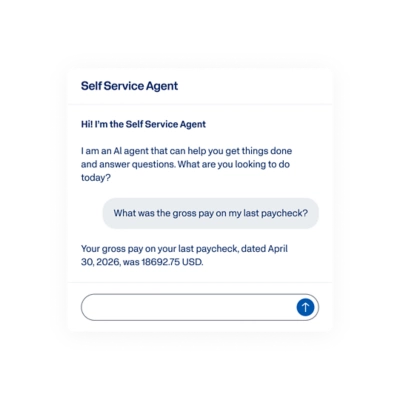
Self-Service Agent
From question to completion in one conversation. Self-Service Agent answers in natural language using your policies and Workday data—then drives the work to done.
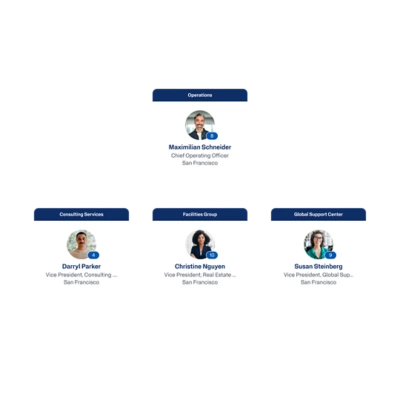
Human Capital Management
Put your people first with AI-driven HR solutions designed to help your team thrive and reimagine how work gets done.
Scaling agentic experiences with purpose.
Philips is bringing this discipline to focused pilots in knowledge management automation and employee self-service, creating opportunities to learn quickly and identify where agents can deliver the greatest value.
The Self-Service Agent is among the first agent capabilities Philips is exploring to help employees navigate organizational knowledge more easily, while Philips’ finance stakeholders are evaluating the Planning Agent. As the company learns from these focused use cases, Workday Everywhere is being considered to extend these experiences to employees around the world.
“We see Workday as a trusted foundation, built for integrations that turn AI agents into meaningful impact.”
Global Solution Architect, People Technology
This focused approach gives Philips a practical foundation for its agentic journey, with each use case generating insight into where intelligent support can improve decisions.
For Philips, agents represent the next step toward more intuitive, connected work, bringing knowledge and guidance closer to people while creating more capacity for employees.
Paired with a trusted Workday foundation, that same “start small, prove the value” approach is positioning Philips to keep turning early pilots into meaningful impact for its people, one proven use case at a time.