
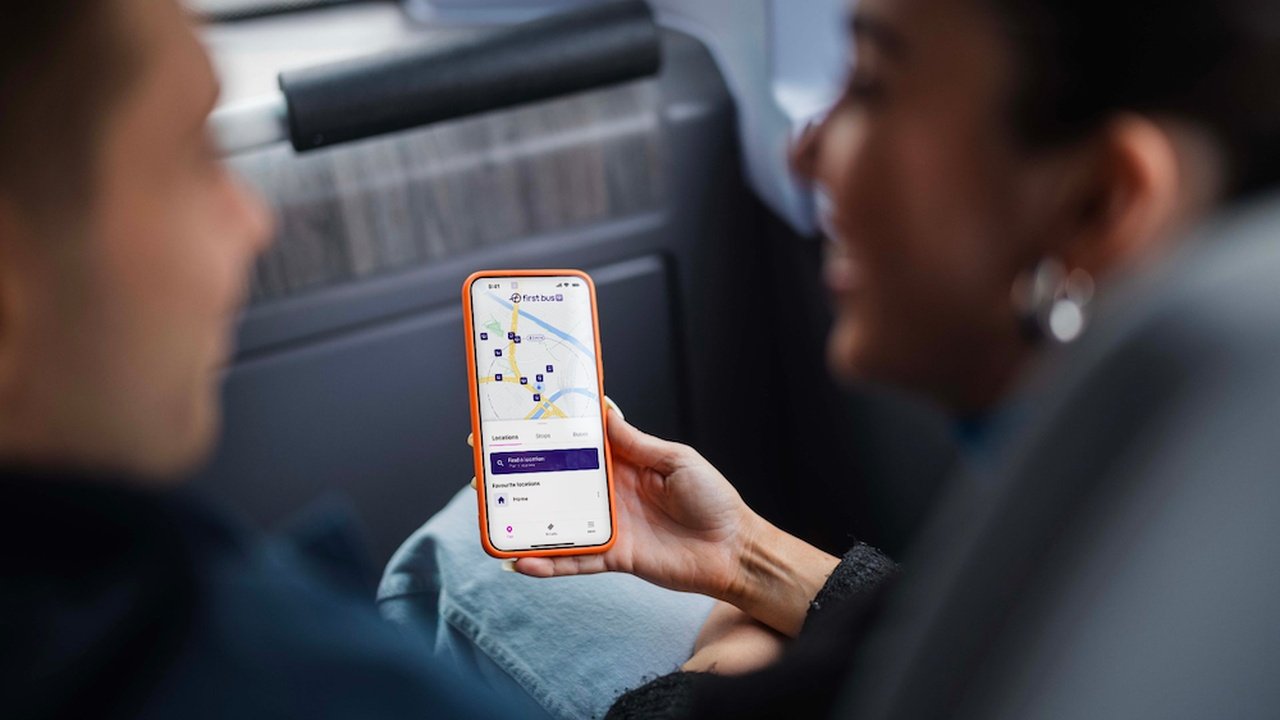
Managing a highly dispersed operation across the UK and Ireland presents unique operational complexities. “We've got 18,000 people within First Bus,” Green explains. “The vast majority of those are bus drivers. And then we've got about 2,500 engineers. So those are the two big populations, 80 different sites across the UK and Ireland and obviously different terms and conditions for all of them.
Overcoming complexity and fragmented operations.
Before launching its digital transformation, First Bus’s operational functions relied on fragmented systems and processes. “We had 63 different systems with 84 interfaces, all point solutions,” says Kevin Green, Chief People Officer at FirstGroup, a FTSE 250 transport company.
“When I wanted to talk about absence or attrition, we’d spend the first half hour to an hour arguing about the data because it came from different systems.”
To address these communication and data gaps, the company needed a unified, agile platform to supporta much bigger purpose.
"What we're trying to do is get people off of planes, onto trains, and out of cars and onto buses... if we're serious about climate change, then public transport is hugely important," Green explains.
To drive this corporate mission, leadership launched a new overarching strategy. “The focus for the strategy was to turn us from an asset business to a service business, with people and customers at the centre of it,” says Green.
When I wanted to talk about absence or attrition, we’d spend the first half hour to an hour arguing about the data because it came from different systems.
Kevin Green, Chief People Officer, First Bus
Connecting a highly dispersed, deskless workforce.
Reaching the frontline required a technological shift designed specifically for remote workers.
“We want to put the power of information and communication in the hands of our employees,” Green notes. “They don't have email addresses. We don't give them computers. They're remote workers. We've got 80 different depots, so they're very dispersed.”
To bridge this physical gap, First Bus made a major technology investment, deploying Blink and Workday over a 12-to-18-month period. Rather than an incremental rollout, the company chose a comprehensive approach. “We've deployed all of the modules. So we've gone big bang. This isn't an incremental thing. We’ve implemented talent and recruitment - and we also wanted to interface with Blink. And the reason for that is that's how our frontline workforce, the drivers and the engineers are going to get access to the platform.”
This integrated deployment changed how frontline employees interact with the business. “In terms of deployment of Workday, what that's done for frontline staff is give them one place where they can get access to their rosters and their shifts so they can see what they're doing next week,” says Green. “We're speeding the whole process up, making it easy for them to use, so it's at their fingertips.”
Workday gives frontline staff one place to access their rosters and shifts, so they can see what they’re doing next week.
Kevin Green, Chief People Officer, First Bus
Driving adoption and building a unified culture.
While Green acknowledges that the process took longer and was more difficult than anticipated due to organisational complexity, the business case is already delivering clear value. Just three months post-launch, adoption outpaced initial expectations:
- High frontline engagement: First Bus achieved a 96% adoption rate on Blink and approximately 78% adoption on Workday within the first 90 days.
- Impending payroll growth: Adoption figures are expected to rise even further as the company completes the deployment of its payroll solution.
- Data-driven leadership: The unified platform successfully resolves the historical data silo problem. For managers, it provides the centralised data and information necessary to make better operational decisions.
Ultimately, this digital transformation serves a much larger cultural objective. “I want people to belong and be proud to work in our organisation,” Green concludes. “And to do that, they’ve got to know what’s going on, why the change is happening, and what we think is important for them to deliver for us.”